
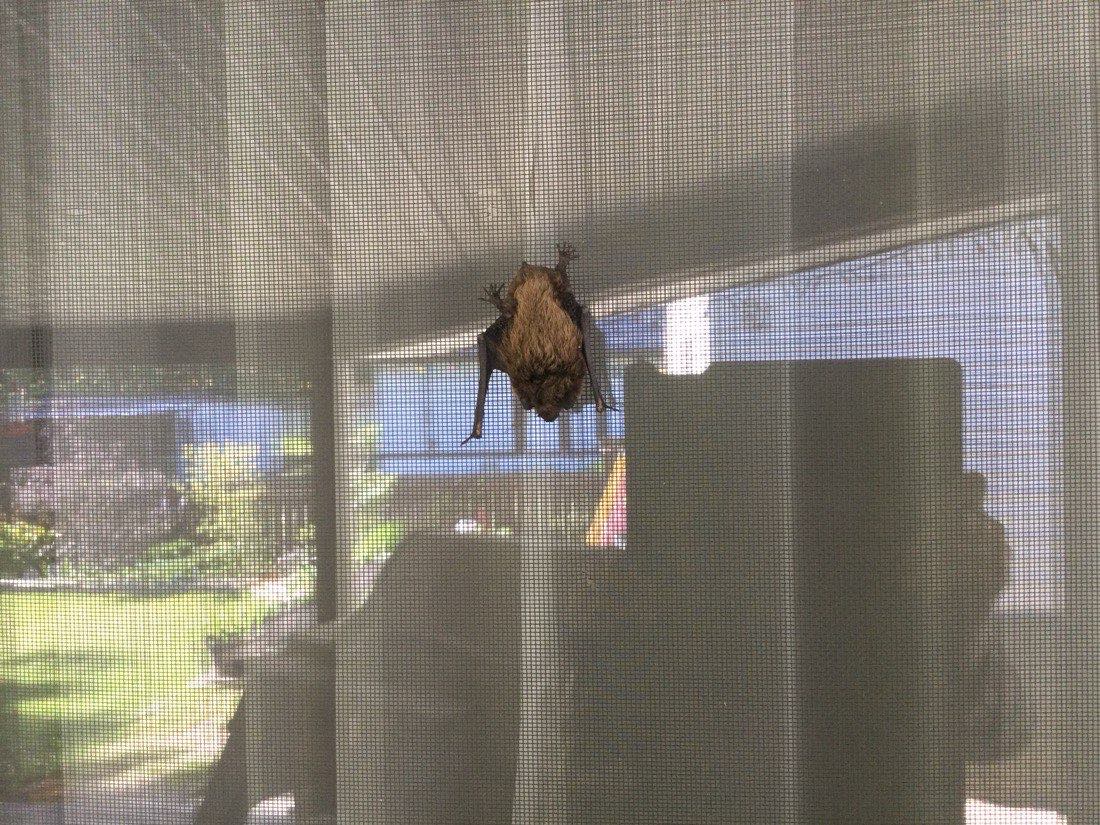
Bats like it cozy and warm, so the snug folds of a retractable awning or a rolled-up patio blind make an ideal daytime roost. The trouble comes when the awning is rolled up, or the blind is closed, with bats still tucked inside — and they are crushed.
It happens more often than you might think. Because all bats are protected under the BC Wildlife Act, it’s worth taking a moment to keep them safe.
Found a whole group of bats rather than one or two? That’s a colony, see living with a colony and report it so we can help.
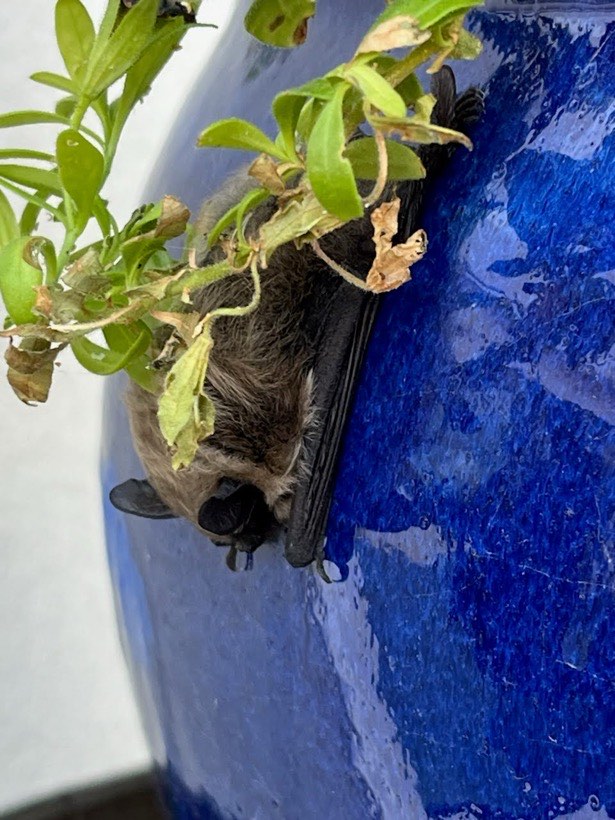
Learn to co-exist.
Bats are quiet, harmless neighbours. If you can share the space, the simplest kindness is to let them rest and just be mindful of their comings and goings.
How bats use your awning
- They can squeeze into a gap as small as ¼ inch.
- They sleep through the day and fly off within the first hour or so after sunset.
- They leave in the fall for winter hibernation sites, caves, mines, and deep rock cracks.
- Never exclude bats between May 1 and September 1 — this is maternity season, when flightless pups may be present.
Move the bats along.
If you’d rather bats didn’t roost in your awning, you can gently encourage them elsewhere, as long as it’s outside maternity season and you never trap a bat inside.
Make it less inviting
- Leave the area brightly lit at night.
- Set up a fan to blow across the awning after dark.
- Hang orchard tape, flashing, mylar strips, or balloons nearby.
- Try an aerosol repellent such as Critter Ridder.
- Put up a bat box nearby as an alternative roost.
Seal the housing
- Ask about re-designing the unit with a proper closing mechanism.
- Use a wood strip to seal the gap between the housing and the building — bats squeeze into a ¼″ gap, so close every hole.
- Close the awning after sunset, once the bats have left.
- Look for bats with a flashlight before rolling it up.
No housing unit?
- Seal the gaps between the unit and the building.
- Add a slippery surface, tin or plastic, so bats can’t grip and roost.
- Keep awnings rolled up and closed after sunset.
Not sure where to start? A regional coordinator can walk you through the options for your setup.
Contact the manufacturer.
Awning and blind makers often don’t know their products are trapping bats. Letting them know helps, and some already offer retrofit parts to close the gaps.
Because bats are protected under the BC Wildlife Act, manufacturers have good reason to design housings that bats can’t get into. If your awning or blind is trapping bats, let the maker know and ask whether a retrofit kit is available.
- Tell the manufacturer where and how bats are getting in.
- Ask about retrofit parts or a closing mechanism for your model.
- We can share a draft letter template to make this easy, get in touch.
Please also report bat use of awnings to us. Your reports help us track the problem and work with manufacturers on safer designs.