

If your pet caught a bat.
Cats and dogs are natural hunters, and a bat on the ground or flying low is an easy target. A pet that catches a bat risks injury and possible rabies exposure, and the bat rarely survives. If it has already happened, stay calm and work through the steps below.
Separate your pet
Move your pet away from other animals and people, and keep everyone calm while you deal with the bat.
Contain the bat
Never use bare hands. Wear thick leather gloves and long sleeves, and use a trowel, dustpan, or pillowcase to move the bat into a box with a tight lid and pencil-sized air holes. See what to do if you touched it.
Call your veterinarian
Contact your vet immediately for advice. Fewer than 0.5% of bats carry rabies, but it’s safest to assume the risk. Your vet will assess what treatment, likely a booster, your pet needs.
Report the exposure
Email publichealthvet@bccdc.ca to report the bat exposure, and let your regional coordinator know.
Then, depending on the bat.
Once your pet is safe and the bat is contained, what happens next depends on the bat’s condition.
If it’s injured
Call your regional Community Bat Program coordinator or your local wildlife rehabilitation centre to see if the bat can be helped.
If it’s dead
Wrap the bat in paper towel, seal it in a ziploc bag, and keep it cold. Tell your vet you have it, then call your regional coordinator, it may be collected for testing.
If it’s unharmed
If your vet doesn’t need it for rabies testing, release it outside on a tree at head height or higher, never on the ground, in a box, or tossed into the air. Still there next morning? Contact your coordinator.
Outdoor cats are the number-one cause of bat deaths reported to our program in BC.Keep cats indoors between dusk and dawn
Keep your cat in at night.
Supervise pets outdoors and keep cats inside from dusk to dawn. It keeps bats alive, and keeps your cat safer too.
Cats can hear the high-pitched squeaks and echolocation calls of bats, and can easily hunt them down. Some cats even learn exactly where a colony roosts and wait for the bats to emerge at dusk. Keeping your cat indoors between dusk and dawn is the single most effective thing you can do.
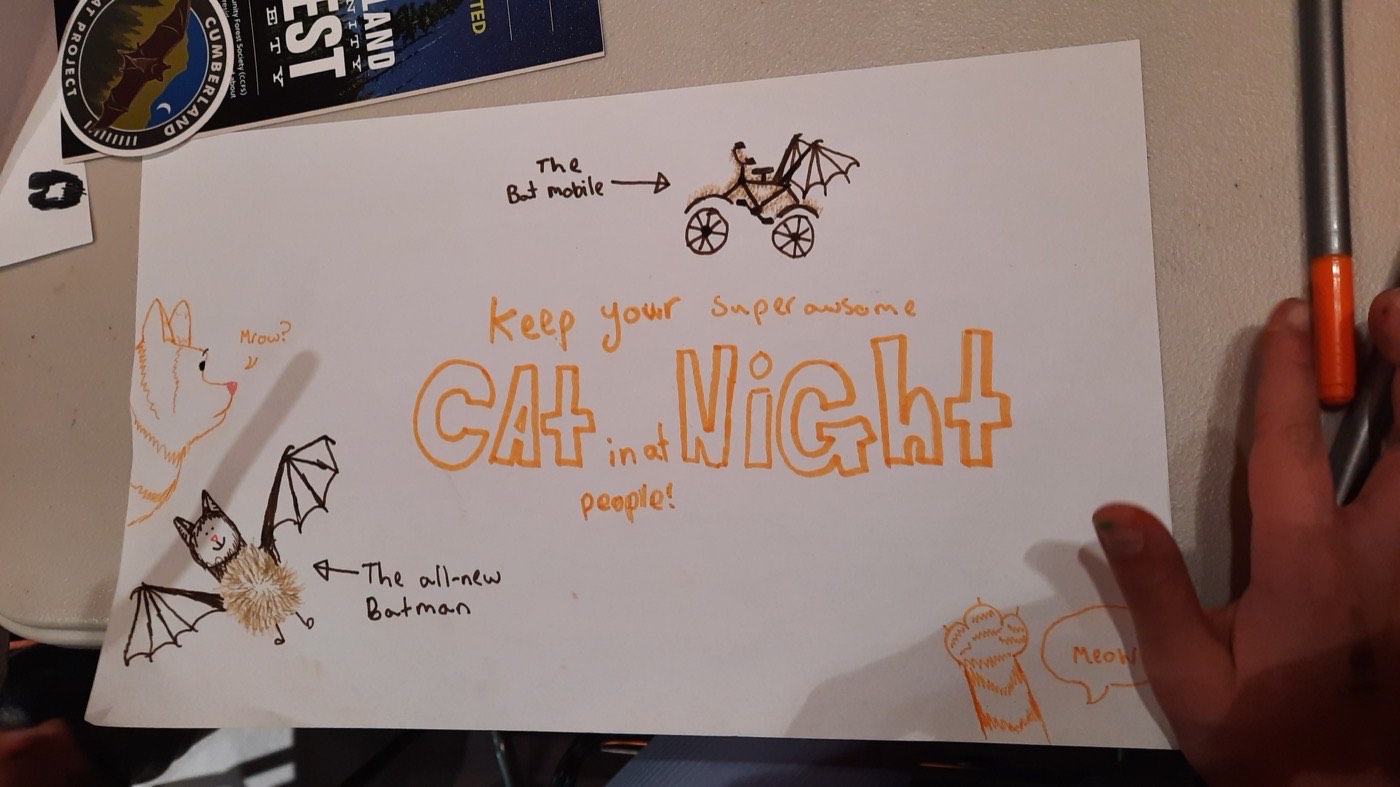
“Keep your cat in at night” kids’ poster.
BC Community Bat Program · Cumberland
Supervising pets outdoors protects them from far more than bats, and protects local wildlife from your pets. Review the Happy Cat brochure for tips to keep your cat and your local wildlife happy and safe.