
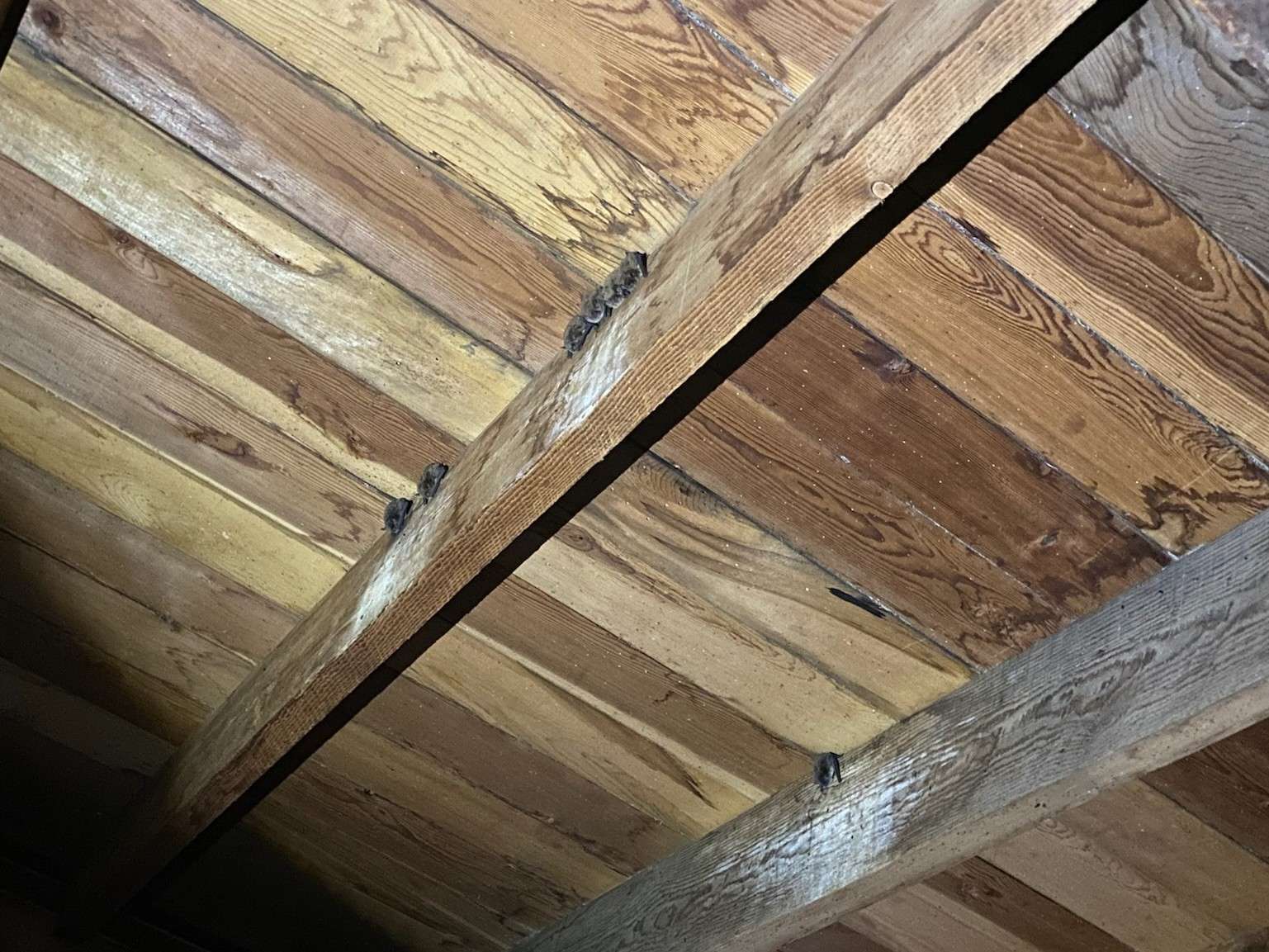
Bats make good neighbours. If you have a colony living in a building or bat box on your property, you don’t have to move them on, with a little care you can coexist safely and even enjoy them. Explore why a colony is worth keeping, and what you can do to help yours thrive.
Good reasons to stay.
There are many reasons you might decide to maintain your colony rather than try to get rid of the bats. Here’s what a colony gives back.
Natural pest control
Each night, bats consume hundreds of noxious pests, mosquitoes, agricultural pests, and forest pests.
Free garden fertilizer
Bat guano is an excellent fertilizer for your garden, a natural bonus of hosting a colony.
A living classroom
Bats are fascinating, especially for children. Some landowners even install a viewing chamber to watch the bats without disturbing them.
Critical habitat
Your roost may be providing critical habitat. If the bats can stay where they are, the chance of losing the colony is much lower.
Long-lived & vulnerable
Unlike rodents, bats are long-lived, more than 30 years, and usually raise just a single pup a year, which makes them slow to recover from decline.
Low disease risk
Bats rarely carry rabies, and sicken and die if they contract it, unlike some other animals that carry it unaffected.
Most colonies in buildings are maternity colonies, groups of females that gather to raise pups and return to the same roost year after year. Because they’re so faithful to a good site, keeping the colony where it is helps the whole group.
Want to keep bats but manage the mess? See Managing a colony for practical tips, including how to handle bat guano.
Colonies in buildings.
Across BC, homeowners and public spaces alike share safe, secure roosts with bats. Colonies most often turn up in two places.
Some public spaces and businesses choose to maintain their colonies too, such as the historic schoolhouse in Nanaimo, the Peachland historic school, and the Townsend’s Big-eared bat colony in the golf clubhouse at St. Eugene’s Mission.
Bats in attics
Warm, quiet, and undisturbed, attics make ideal maternity roosts, from the Denman old school and Metchosin Hall to the Peachland Visitor Centre.
Siding & soffits
Bats also tuck into gaps behind exterior siding and soffits, seen at homes in Hope and Saanich and at the Vancouver Rowing Club.
Learn about your bats.
If you have a colony living in a building or bat box, there are lots of simple ways to get to know it, and to help provincial monitoring of BC’s bats.
- Learn the basics. Read up on BC bats, their biology, and their ecology in our Bats 101: All About Bats guide.
- Register your colony. Report your colony to help contribute to provincial monitoring of bats.
- Send us guano. Collect bat guano and send it in for species identification, this helps us learn which bats roost on your property, and where bats are found in BC.
- Count your bats. Start annual bat counts during the summer to estimate how many bats roost with you, then share your data. This is especially important for monitoring white-nose syndrome.
- Watch for spring arrivals. Bats return earlier in some parts of BC and later in the north, report the first bat of the year to help us understand their hibernation timing.
- Reduce hazards. Create a bat-friendly backyard so your colony has a safe refuge. Our Bat-friendly Community Guide (page 35) has more on making your property safe for bats.