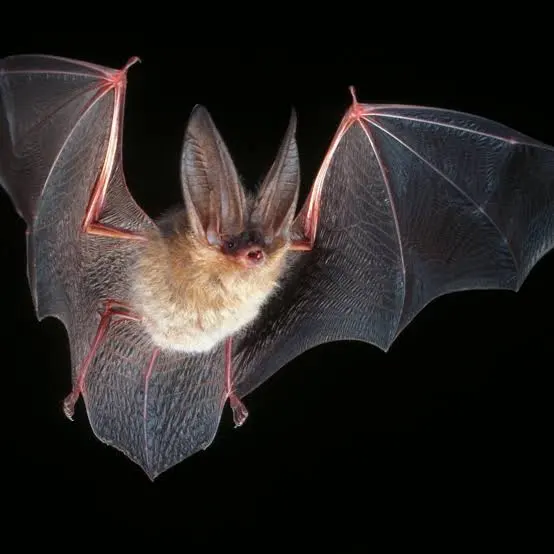
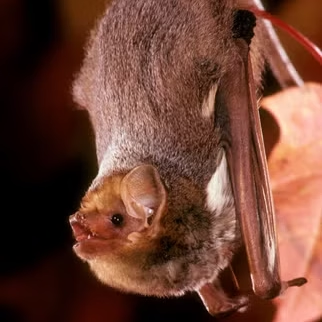
Townsend's Big-eared Bat, Corynorhinus townsendii
Photo: J. Scott Altenbach
Townsend's Big-eared Bat
Corynorhinus townsendii
Forearm40–49 mm
RoostCaves, mines
RangeSouthern BC
Call~25 kHz
From the urgent (you’ve been touched or bitten) to the everyday (a bat in your house), fast guidance for every kind of encounter.
Bats roost in attics, awnings, barns, sometimes for decades. Here’s how to coexist safely, manage a colony, or report one on a property you’re buying or selling.
Bat biology, BC’s 15 species, real-world safety, white-nose syndrome, and the conservation science that shapes our work.
See all in About bats →Summer evening bat counts, acoustic surveillance, ambassador training, Bat-Friendly Community certification, bat boxes. The province-wide network runs on people.
See all in Help bats →Guides, downloads, and outreach materials tailored to who you are, a homeowner, a teacher, a kid, an industry partner.
See all in Resources →Reach a regional coordinator, get in touch with us, browse the latest, or meet the partners and funders behind the work.
Support our work DonateLet’s explore unique bat biology, anatomy, adaptations and life history. Learn where bats live and what they need to survive.
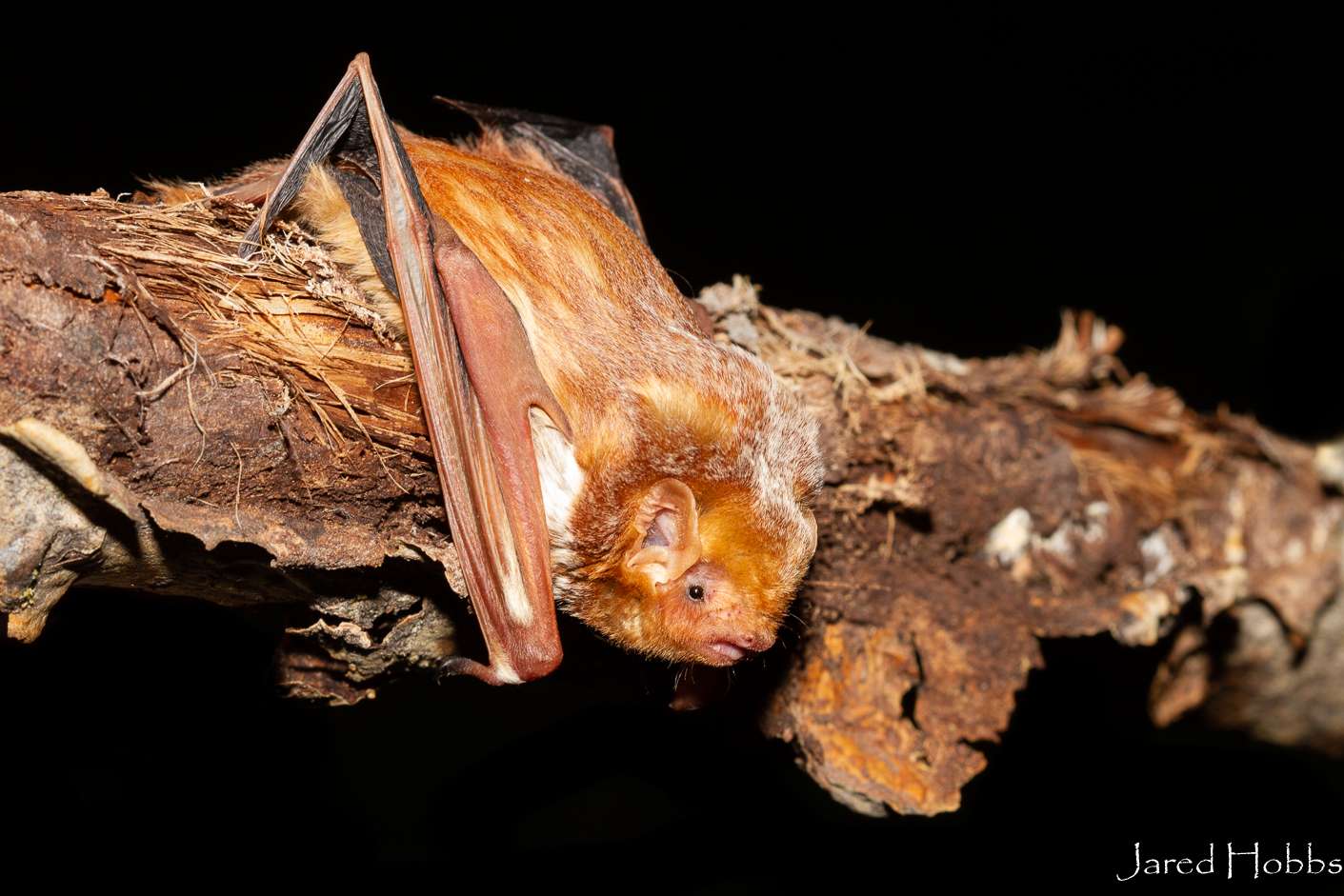
Eastern Red Bat, Lasiurus borealis.
Photo: Jared Hobbs · 2012
They belong to their own group of mammals (“Order”) called Chiroptera, which means “hand-wing.” Bats are the only mammals capable of true, sustained flight, and far more closely related to primates (such as monkeys and humans) than they are to rodents.
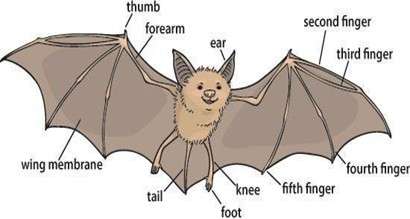
Bat anatomy, annotated diagram.
Unlike bird wings, bat wings are made of two layers of thin skin stretched over long finger bones. Bats have five fingers on each “hand” and foot, just like us.
Having elongated fingers in their wings allows bats to bend and change wing shape in different directions. It helps them turn, hover, and catch insects with ease. Their wings are also strong and resilient, built for fast, agile flight.
When resting, bats fold their wings to protect the delicate membrane from tears and sun exposure.
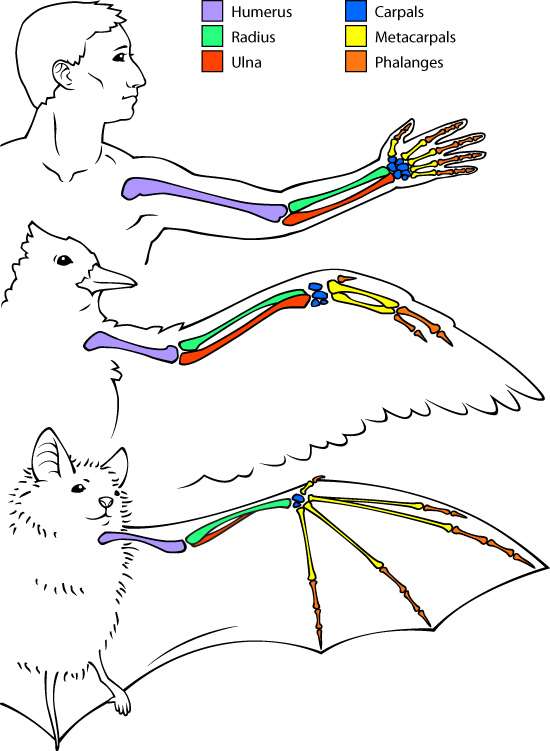
Wing anatomy, hand-wing skeletal structure.
Everyone knows that bats roost (rest and sleep) upside down. That’s because bat feet are rotated about 180° compared to ours, so they point “backward” to us. Bats also have a special tendon system that lets them grip with their feet effortlessly. When a bat hangs, its body weight pulls on the tendons, causing the feet to tighten and lock in place. This is how bats can still hang on when they are sleeping or hibernating.
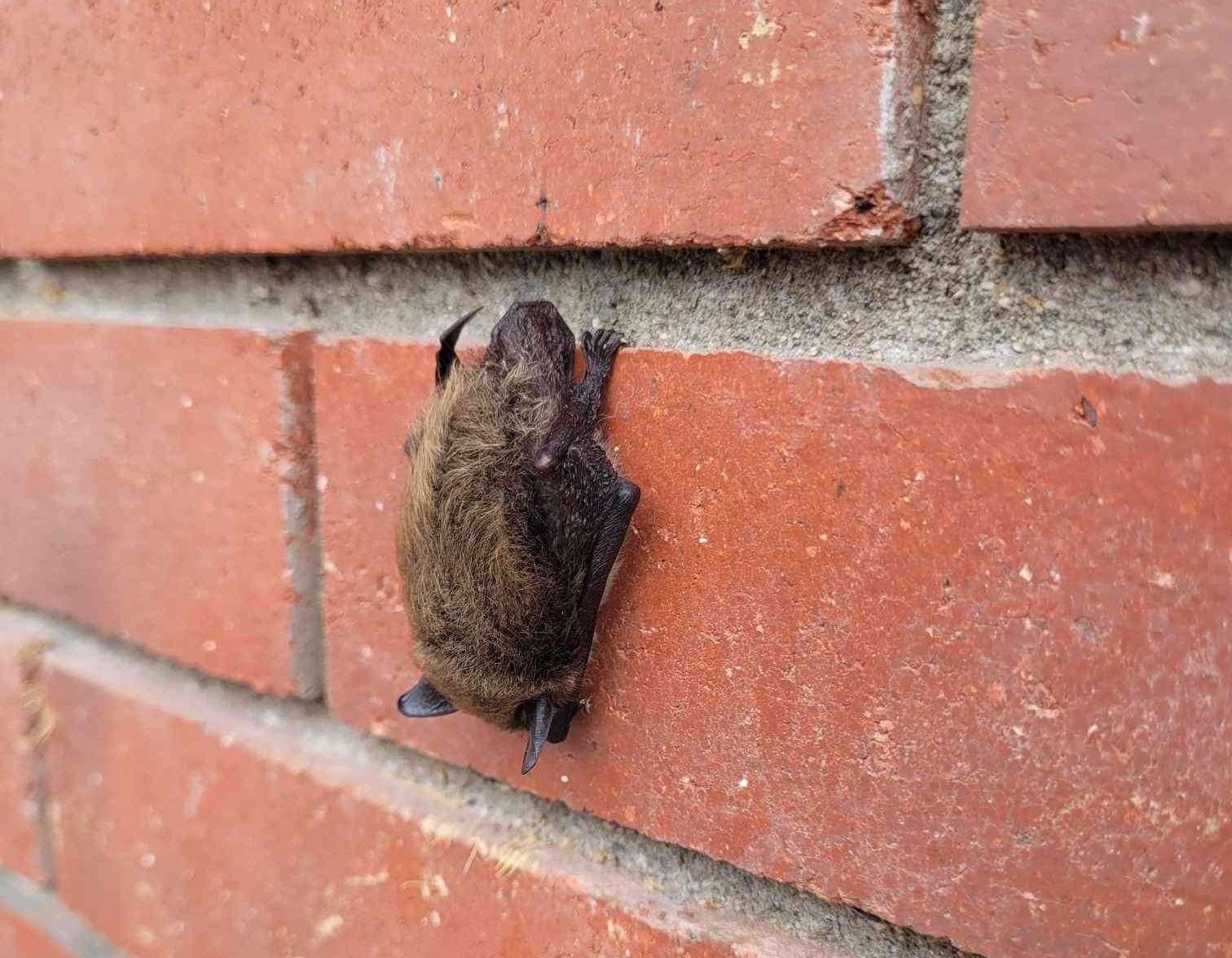
Roosting upside-down, Kelowna, BC.
Photo: Anna Skurikhina
Bats are not blind, and yet they can’t fully rely on their vision to fly around and catch insects at night. Bats navigate their night world using echolocation. Just as the word implies, they locate objects in space by listening for rebounding echoes of their very loud, high-frequency calls.
We cannot hear bats echolocating. Their calls are at such a high frequency that they are above the hearing range for humans. Cats and dogs can hear them, though, so if you catch your pet staring at the night sky in summer, they aren’t crazy, they may be listening to the bats flying and calling as they pass by.
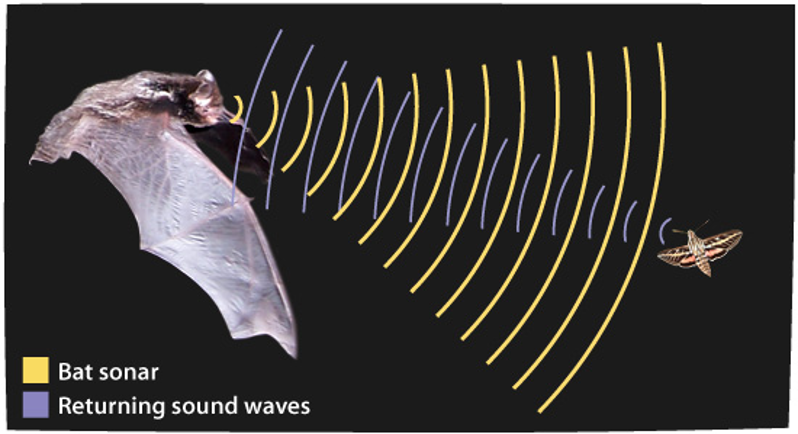
Echolocation, diagram by Arizona State University.
Bats are unusually long-lived for small mammals. A typical mouse lives one to two years; many BC bats live fifteen to thirty. They reproduce slowly, a single pup per female per year, born in summer in maternity colonies. The long lifespan and slow birth rate are why bat populations are so slow to recover from a shock like white-nose syndrome.
Like other wildlife, bats need three basic things to survive: food, water, and shelter (roost sites).
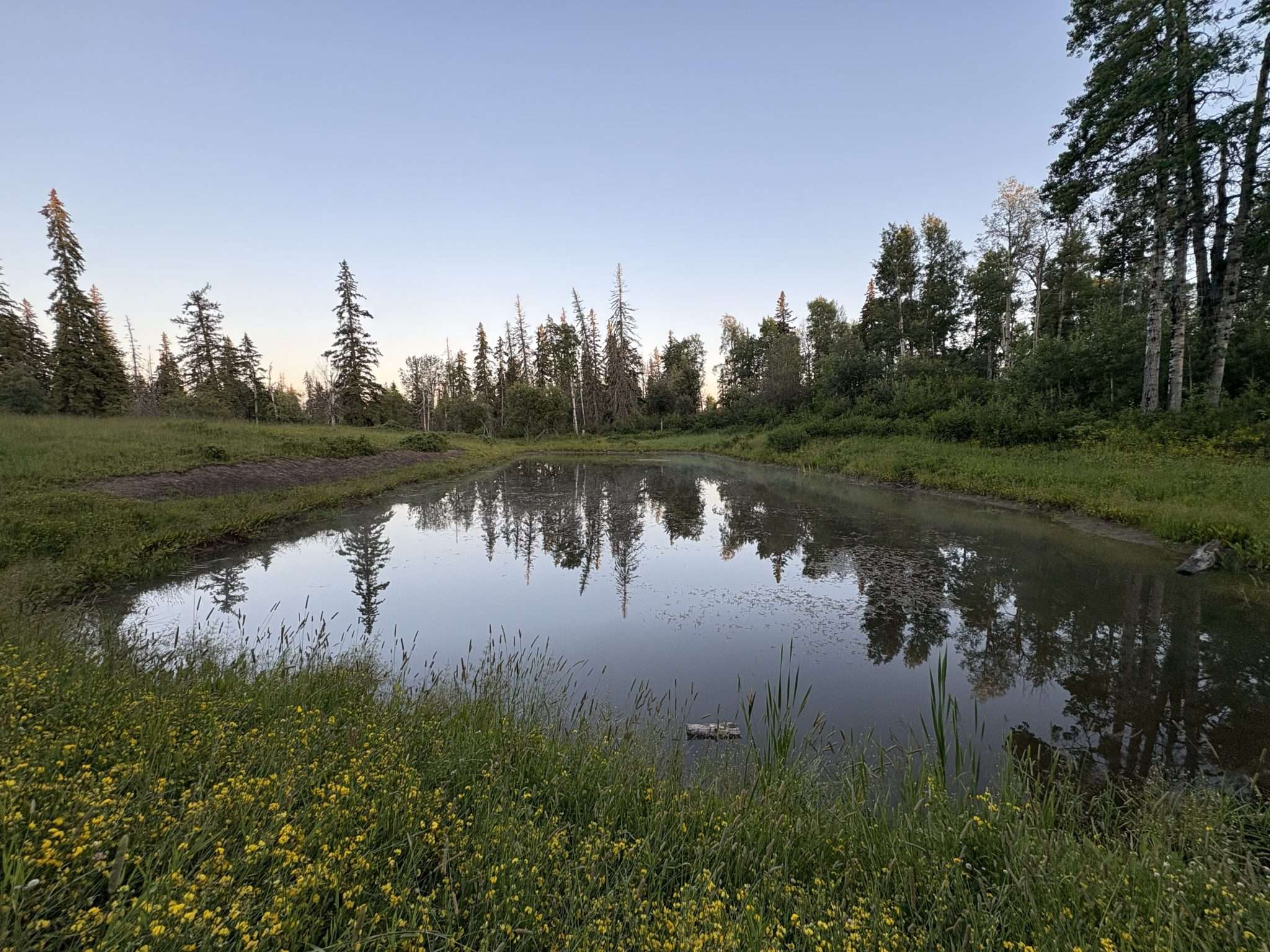
Forest dugout, Peace region, BC.
Photo: Anna Skurikhina
Bats drink while flying, so they need open pools of clean water without obstacles that could obstruct their flight path. Bats choose slow-running, calm waters over rapids. Natural ponds, wetlands, creeks and slow streams are excellent sources of water for bats.
BC bats use a wide variety of habitats when hunting their insect prey, including wetlands, forests, shrub and grasslands. The more variety in the plant community and habitats, the more variety and abundance there will be in an insect community. Common prey groups include flying insects (moths, mosquitoes, beetles, lacewings and grasshoppers), spiders and even scorpions. While most bats catch insects in flight, some BC species, such as Long-eared Myotis, Northern Myotis, and Townsend’s Big-eared Bat, “glean”: they gather insects off the surfaces of plants and occasionally from the ground.
Bats use trees, stumps, buildings, bridges, rockwalls, abandoned mines, caves, and karst to roost. The shelter is the most fragile part of a bat’s life, disturb a maternity colony in summer and the season’s pups die.
Bats are not rodents. They are far more closely related to primates, to monkeys, and to us, than they are to mice.Order: Chiroptera, “hand-wing”
Food, water, shelter, the same things any mammal needs. The way bats need them is what makes them so vulnerable to ordinary human choices.
Moths, mosquitoes, beetles, lacewings, grasshoppers, even spiders and scorpions. Three BC species (Long-eared, Northern, Townsend’s Big-eared) “glean” insects off plants instead of catching them in flight.
Bats drink on the wing, scooping water from ponds, wetlands, creeks, slow streams. They need calm, clean, open water with no obstacles in the flight path.
Trees, stumps, buildings, bridges, rockwalls, abandoned mines, caves, karst. The roost is the most fragile part of a bat’s life, lose it and the colony collapses.
Many people think bats roost in caves year-round, but that’s not the case. Caves, mines and deep rock crevices are crucial winter hibernation sites (cold, stable, humid), but they’re almost always too cold for summer roosts. Roost preferences are often species-specific.
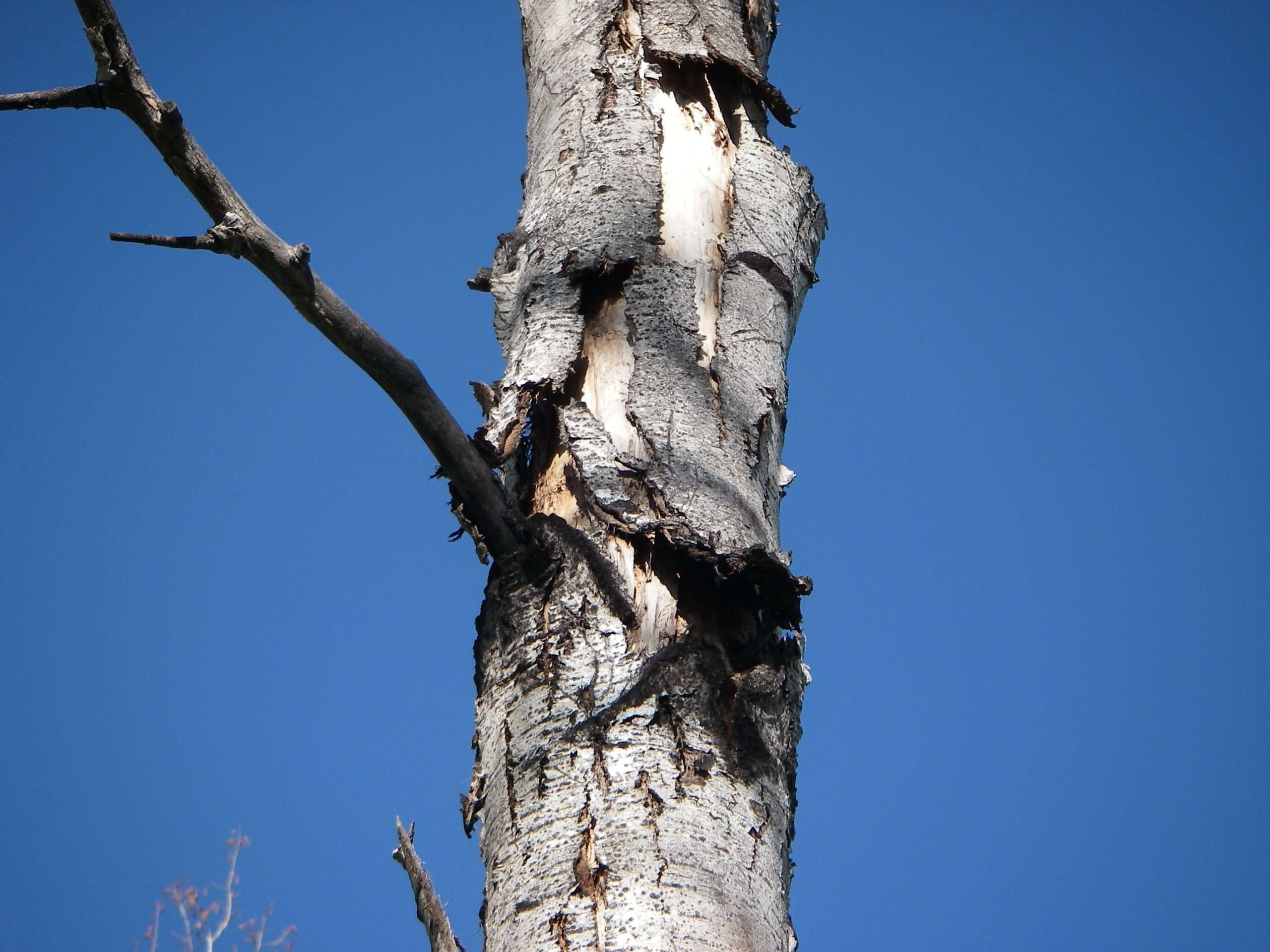
Many bats roost under peeling tree bark, in snags, and in tree cavities and hollows. Old-growth forest and standing dead trees (snags) are essential habitat.
Photo: Farrah
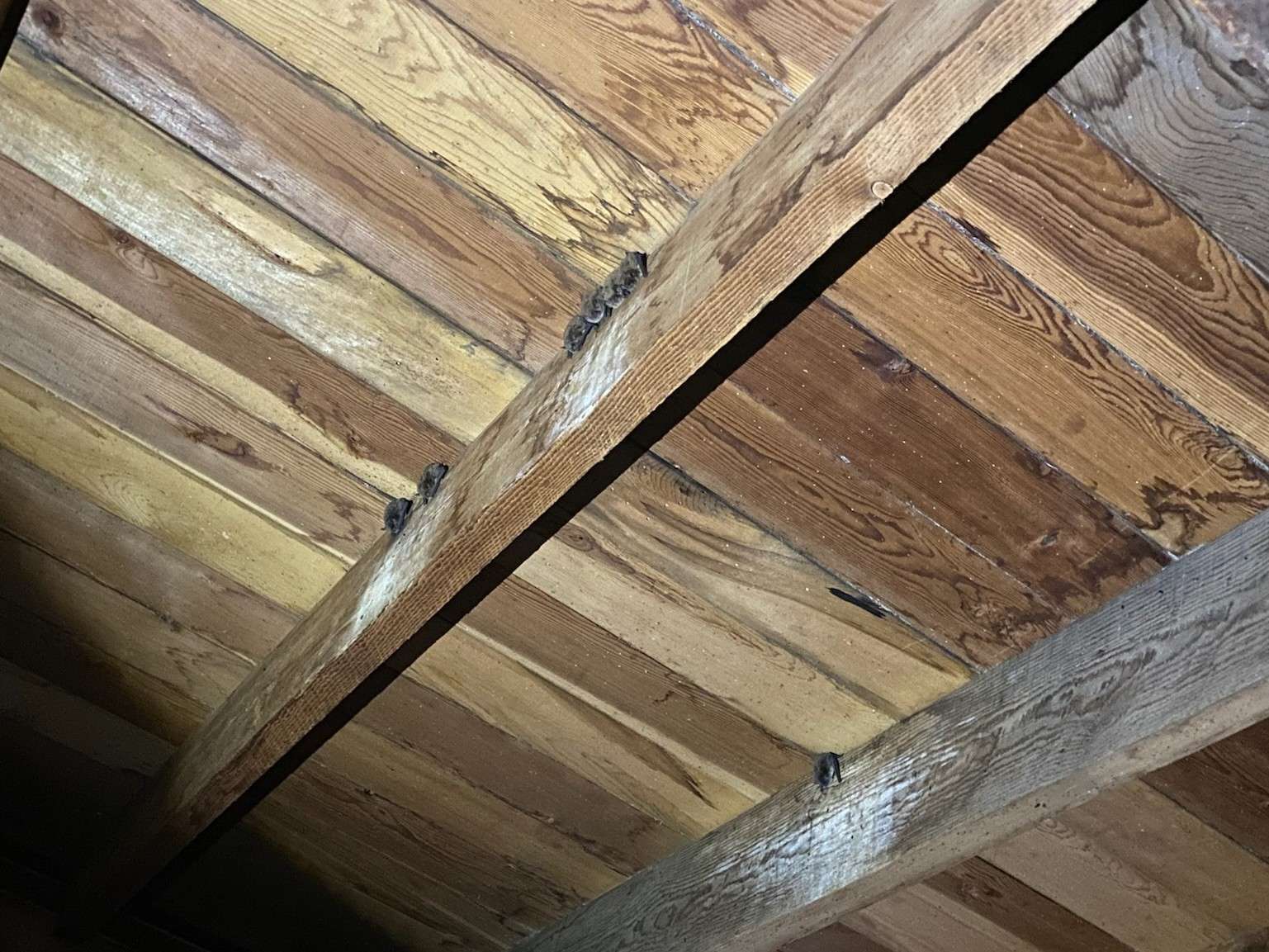
A few BC species roost in buildings, attics and old barns, warm summer maternity sites where pups are born and reared.
Photo: Anna Skurikhina · Vernon, 2023
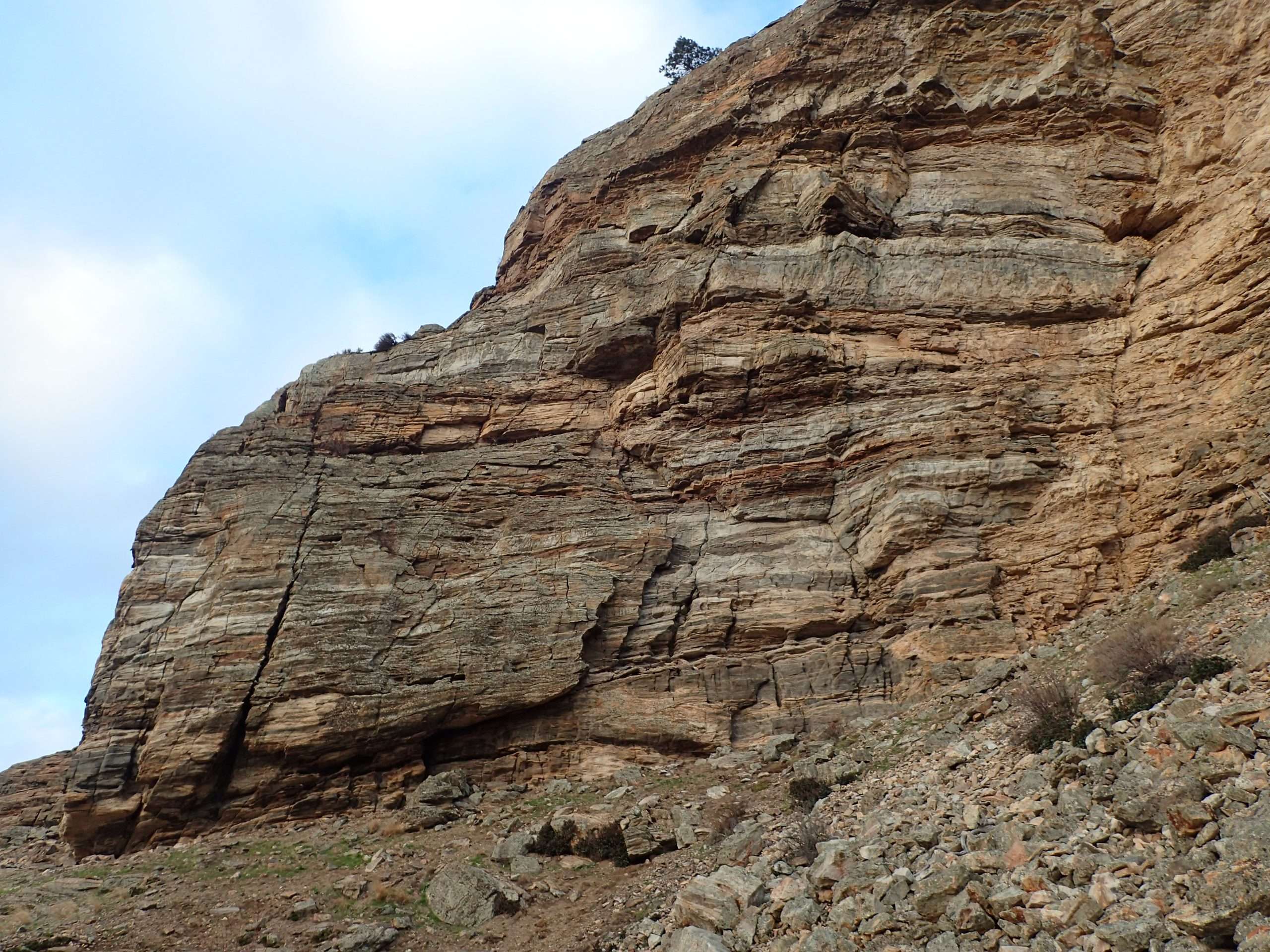
Some BC species roost only in rock crevices, cliff faces, rock outcrops, mudstone bluffs along riverbanks. These habitats are easy to disturb and hard to replace.
Photo: Tanya Luszcz · Vaseux Lake
What bats are doing month by month, and why each season’s needs are different.
Bats emerge from hibernation, often weight-depleted. Females begin pregnancy carrying the embryos they conceived in the fall, an evolutionary trick called delayed fertilization.
Maternity colonies form in attics, snags, and rock crevices. Pups are born in June, one per female. They learn to fly by mid-August, and disturbance now is fatal.
Swarming and mating at cave entrances. Bats build up fat reserves equal to a third of their body weight, the fuel for the long winter ahead.
True hibernation in caves and mines. Heart rate drops from 1,000+ bpm to about 25, body temperature near freezing. A single disturbance can cost a bat 60 days of fat reserves.
From the Okanagan’s cliff-roosting Spotted Bat to the building-dwelling Little Brown across the province, each species has its own range, roost, and call. Tap any card to open its full field-guide entry.
Townsend's Big-eared Bat, Corynorhinus townsendii
Photo: J. Scott Altenbach
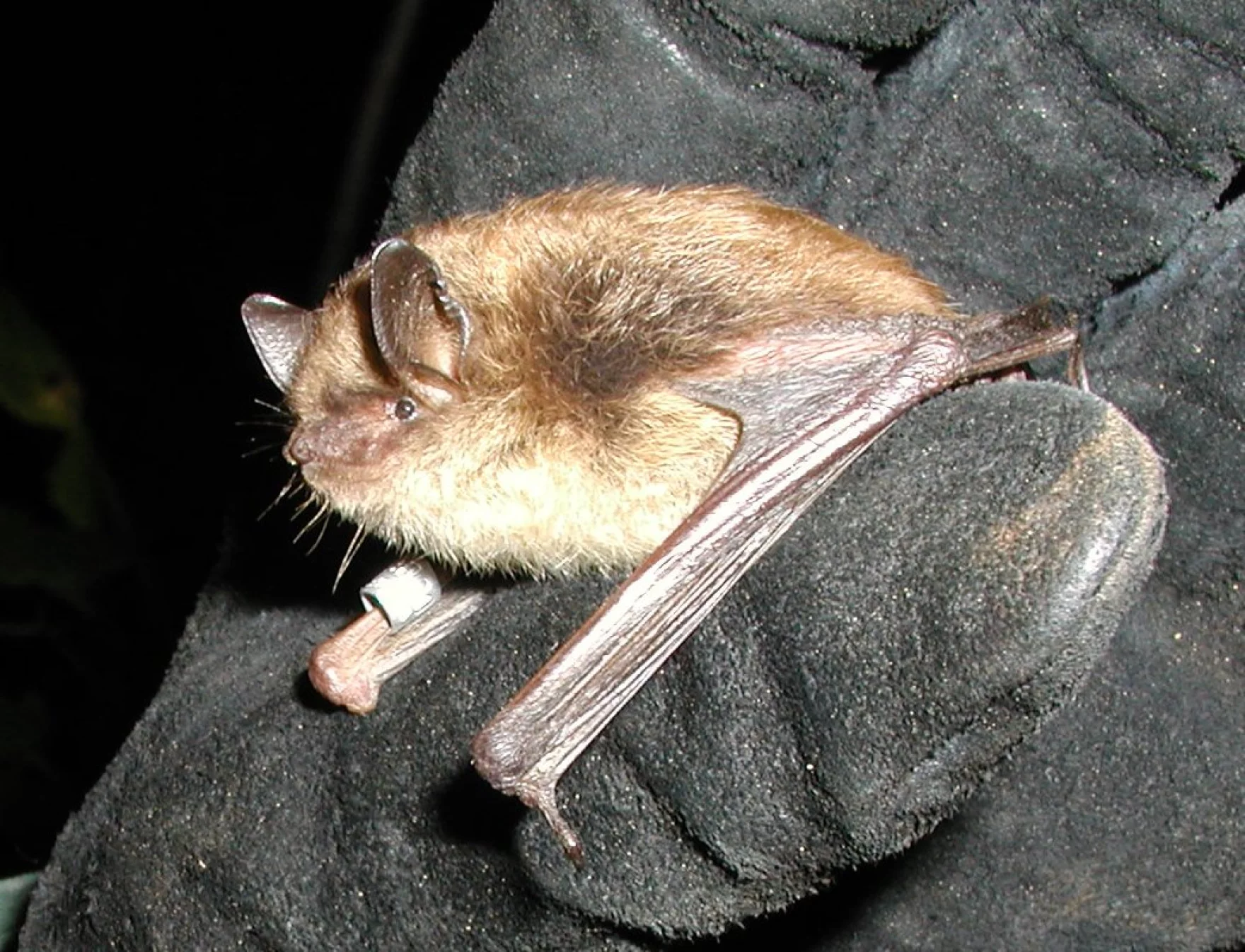
Little Brown Myotis, Myotis lucifugus
Photo: Vermont Fish & Wildlife
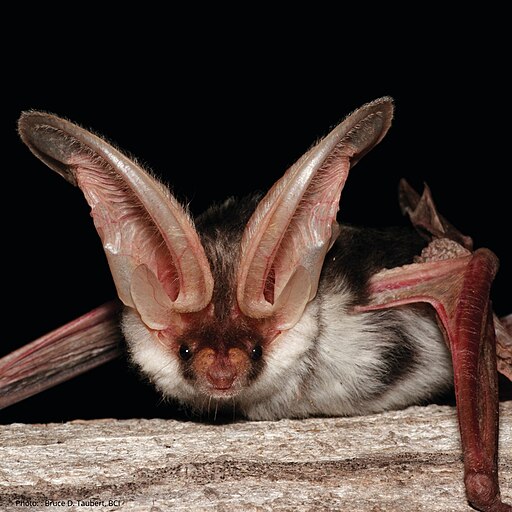
Spotted Bat, Euderma maculatum
Photo: Bruce D. Taubert
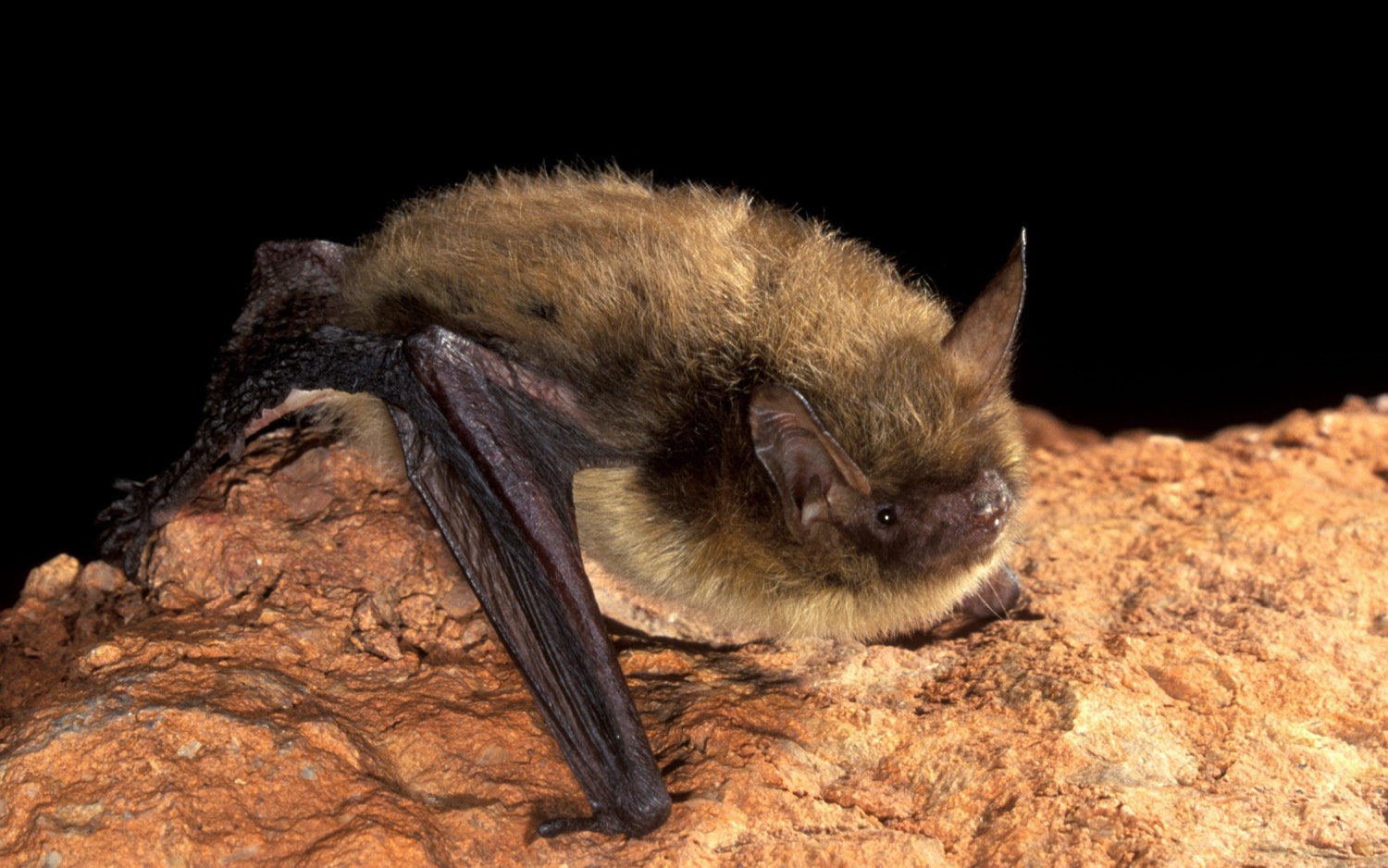
Northern Myotis, Myotis septentrionalis
Photo: Bat Conservation International
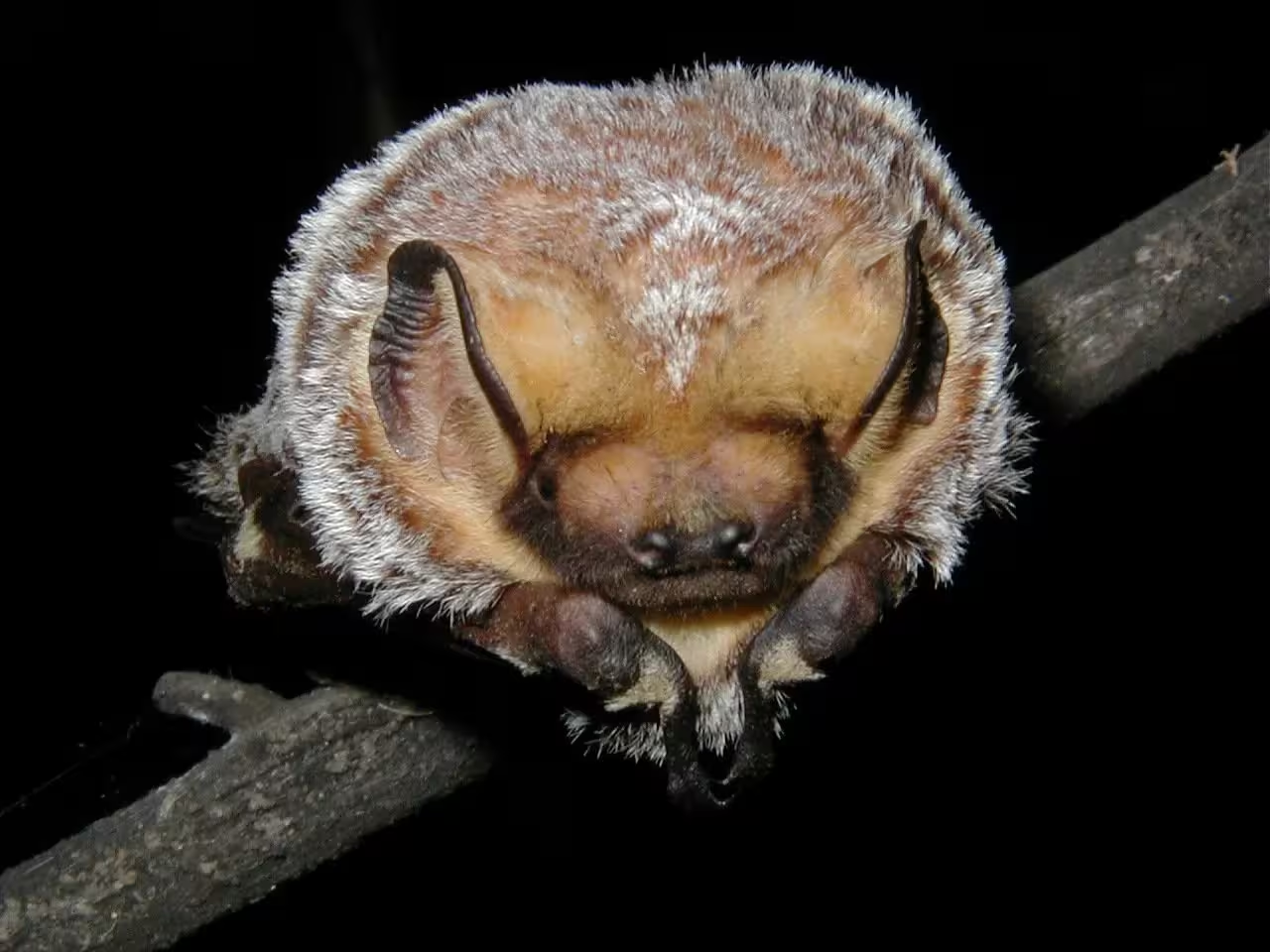
Hoary Bat, Lasiurus cinereus
Photo: Paul Cryan
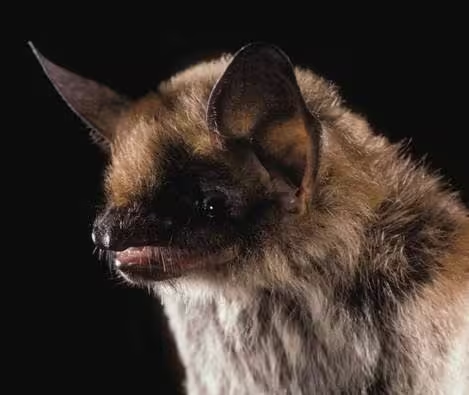
Fringed Myotis, Myotis thysanodes
Image © Merlin D. Tuttle, Bat Conservation International, www.batcon.org
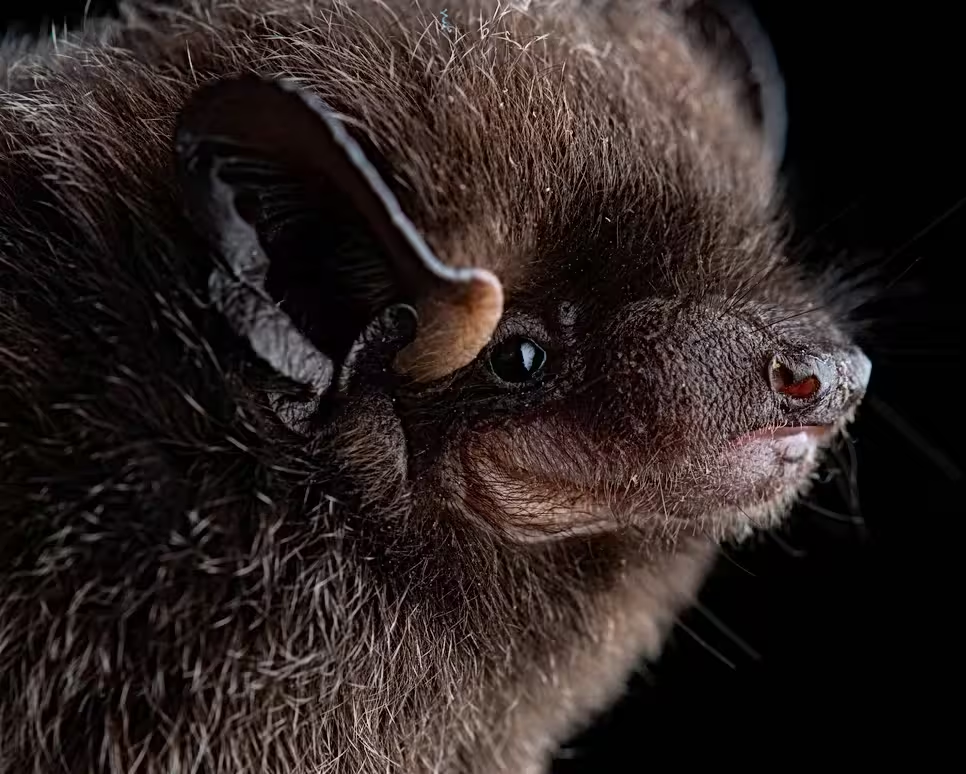
Silver-haired Bat, Lasionycteris noctivagans
Photo: Jose Martinez-Fonseca, NAU
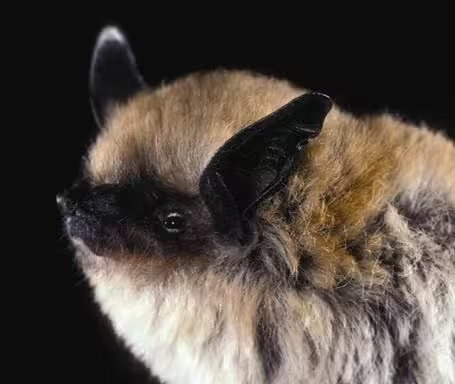
California Myotis, Myotis californicus
Image © Merlin D. Tuttle, Bat Conservation International, www.batcon.org
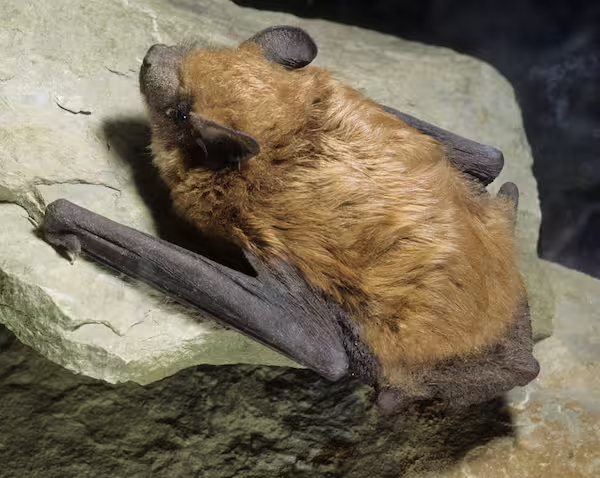
Big Brown Bat, Eptesicus fuscus
Photo: John MacGregor, Land Between the Lakes KY/TN · Public domain
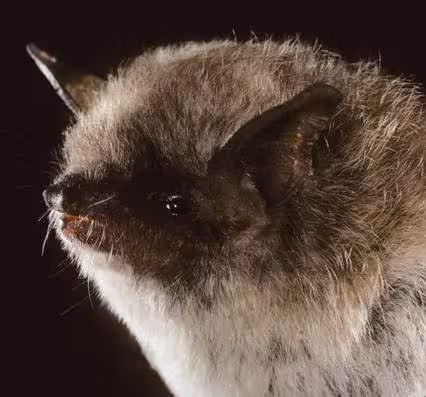
Yuma Myotis, Myotis yumanensis
Image © Merlin D. Tuttle, Bat Conservation International, www.batcon.org
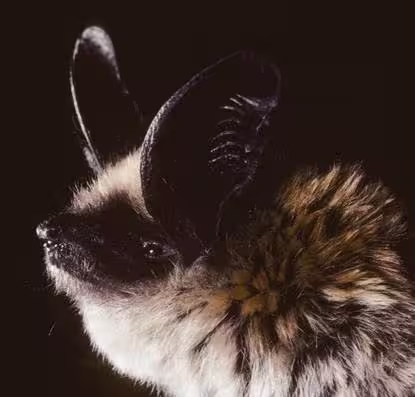
Long-eared Myotis, Myotis evotis
Image © Merlin D. Tuttle, Bat Conservation International, www.batcon.org
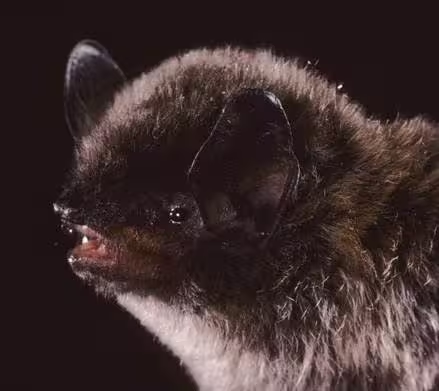
Long-legged Myotis, Myotis volans
Image © Merlin D. Tuttle, Bat Conservation International, www.batcon.org
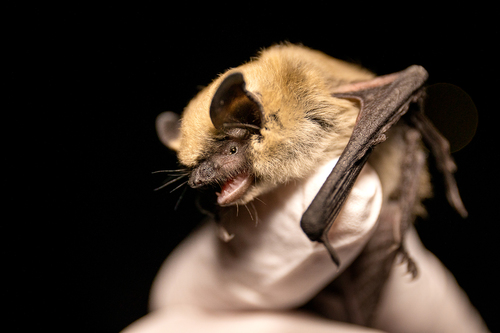
Western Small-footed Myotis, Myotis ciliolabrum
Photo: Jason Headley · fieldguide.mt.gov · CC BY-NC 4.0
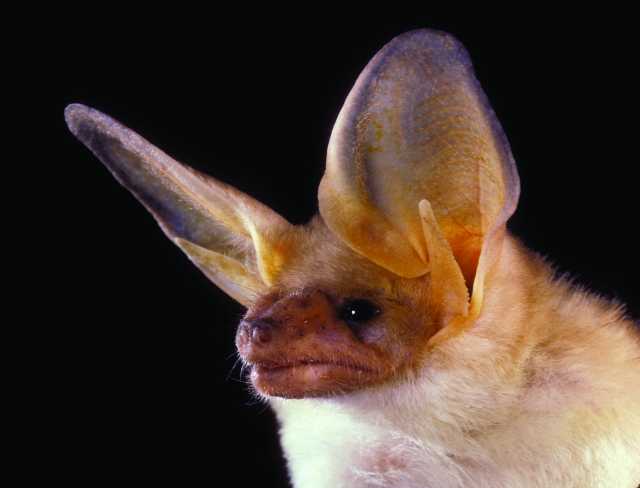
Pallid Bat, Antrozous pallidus
Image © Merlin D. Tuttle
Eastern Red Bat, Lasiurus borealis
Image © Merlin D. Tuttle, Bat Conservation International
BC bats are still doing relatively well by global standards, but the threats are real, and they are largely human-driven.
A fungal disease that has killed millions of bats across North America. Confirmed on the BC mainland in March 2023. Some Eastern Canadian populations have collapsed by over 90 percent in a single decade.
Old-growth removal, snag clearing, cave disturbance, and urbanization fragment the roosts and foraging grounds bats depend on. The roost is the most fragile part of a bat’s life.
Direct collision and barotrauma, lung damage from pressure changes near turbine blades. Migratory species like the Hoary Bat are disproportionately affected; one wind farm can take thousands a year.
No. Despite the resemblance, bats are not in the rodent order, they’re their own order, Chiroptera, and their closest relatives are likely tree-shrews and primates, not mice. The most surprising thing about bats genetically is how unrelated they actually are to anything that looks like them.
Not at all, “blind as a bat” is a misnomer. Every BC species has functioning eyes and uses vision alongside echolocation. Some fruit-eating tropical species rely on vision more than sound. The expression survives because bats hunt at night, not because they can’t see.
Insect control above all. A single Little Brown Myotis can eat over a thousand mosquitoes a night; an entire colony eats tonnes of insects each summer. That has measurable downstream effects on agriculture, forestry pest pressure, and human nuisance. They’re also key prey species for owls and nocturnal predators, losing bats restructures the night.
Less than 1% of wild bats carry rabies, sick bats die quickly, so transmission is rare. That said, any direct contact (a bite, a scratch, or a bat found in a room with a sleeping person or unattended child) is treated as exposure and requires same-day medical attention under BC’s rabies protocol. Never handle a bat with bare hands. See Got Bats? for the urgent steps.
Every bat species in BC is insectivorous. Aerial hawkers like the Hoary Bat catch insects on the wing high above wetlands; gleaners like the Long-eared Myotis pluck insects directly off leaves and bark. None of BC’s bats drink blood, vampire bats live only in Central and South America.
Far longer than you’d expect for an animal their size. While a mouse of similar weight typically lives one to two years, BC bats commonly live fifteen to thirty, and the longevity record for a wild bat is over forty years. This longevity is part of why population recovery after a die-off is so slow.
Yes, and it’s easier than you’d think. Leave standing dead trees (snags) where safe; avoid pesticides that crash insect populations; keep outdoor lighting warm-coloured, downward-facing, and off when not needed; consider installing a properly-sited bat box. See our Conservation page for the full checklist.
Everything linked to this page — free to open and share.
BC’s winter dead-bat reporting protocol is the early-warning system for white-nose syndrome. A single phone call from a homeowner can change what we know about a region.