
Your sighting helps us track BC’s bats.
Whether you want bats out of your house or you’re happy to leave a colony where it is, reporting it helps us keep track of bats across the province.
The Project Biologist in your region can discuss your bat concerns and help you develop a conservation-based strategy for moving them along, one that gets them out without hurting them or you. We’re just as glad to hear from landowners who are happy to have bats where they are, so we can send you what you need to identify and monitor the colony.
A few details go a long way.
You don’t need to be an expert, just tell us what you saw. These four details make your report the most useful.
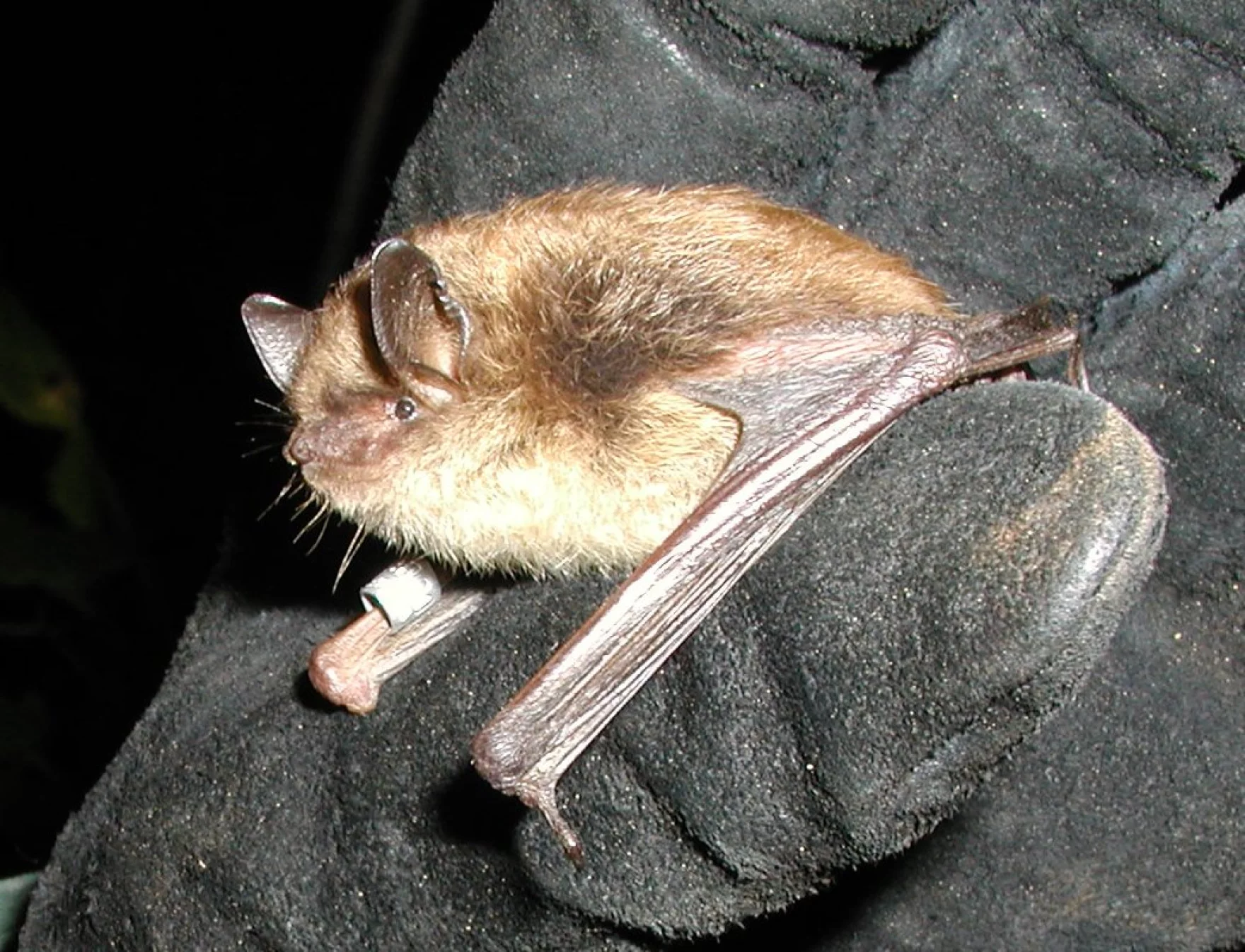
A photo
If it’s safe to take one, a clear photo helps us confirm the species, even a phone snap from a distance.
The location
Where you saw the bat, an address, a nearby landmark, or a dropped pin all work.
The date
When you saw it. If it’s a roost, note the first date bats returned in spring.
How many
One bat, or a group? A rough count tells us whether it’s a single bat or a colony.
Two things we watch for each year.
At certain times of year, particular reports help us track the health of BC’s bats, especially the spread of White-nose syndrome.
Dead or sick bats, Nov 1 to May 31
While not harmful to humans, White-nose syndrome (WNS) is a fungal disease that has devastated bat populations in North America. It’s been detected in bats in Washington State and Alberta. In BC, Pd, the fungus responsible, was found in Grand Forks in 2022 and Metro Vancouver in 2026. As of March 2026, no bats with WNS have been found in BC yet.
During the surveillance period (Nov 1 to May 31), we ask the public’s help reporting dead or sick bats:
- Report a dead bat using the online form.
- If possible, wearing gloves, wrap the bat in a paper towel and seal it in a zip-lock bag, then double-bag it in a second zip-lock.
- Contact your local bat program coordinator right away to arrange pick-up of the carcass.
- Refrigerate the specimen, or freeze it if pick-up will be more than 48 hours away.
Spring arrival dates, April to May
Roost owners & stewards: please check your roost every two weeks in spring and report the date you first notice bats back at the site. Because WNS can cause bats to emerge early from hibernation, these dates help us track how the disease is spreading. Once your bats are back, keep an eye out for dead bats and report any you find.
Three ways to tell us.
Pick whichever is easiest, the online form, your regional coordinator, or a quick email or phone call.