
Winter & spring
Nov 1 to May 31. Report any dead bat, and report winter bat activity, live bats flying or hibernating.
Report your sighting →From the urgent (you’ve been touched or bitten) to the everyday (a bat in your house), fast guidance for every kind of encounter.
Bats roost in attics, awnings, barns, sometimes for decades. Here’s how to coexist safely, manage a colony, or report one on a property you’re buying or selling.
Bat biology, BC’s 15 species, real-world safety, white-nose syndrome, and the conservation science that shapes our work.
See all in About bats →Summer evening bat counts, acoustic surveillance, ambassador training, Bat-Friendly Community certification, bat boxes. The province-wide network runs on people.
See all in Help bats →Guides, downloads, and outreach materials tailored to who you are, a homeowner, a teacher, a kid, an industry partner.
See all in Resources →Reach a regional coordinator, get in touch with us, browse the latest, or meet the partners and funders behind the work.
Support our work DonateIf a bat is hurt, or you’ve found one that appears dead, here’s how to help safely, and how to report it so it can be cared for or tested.
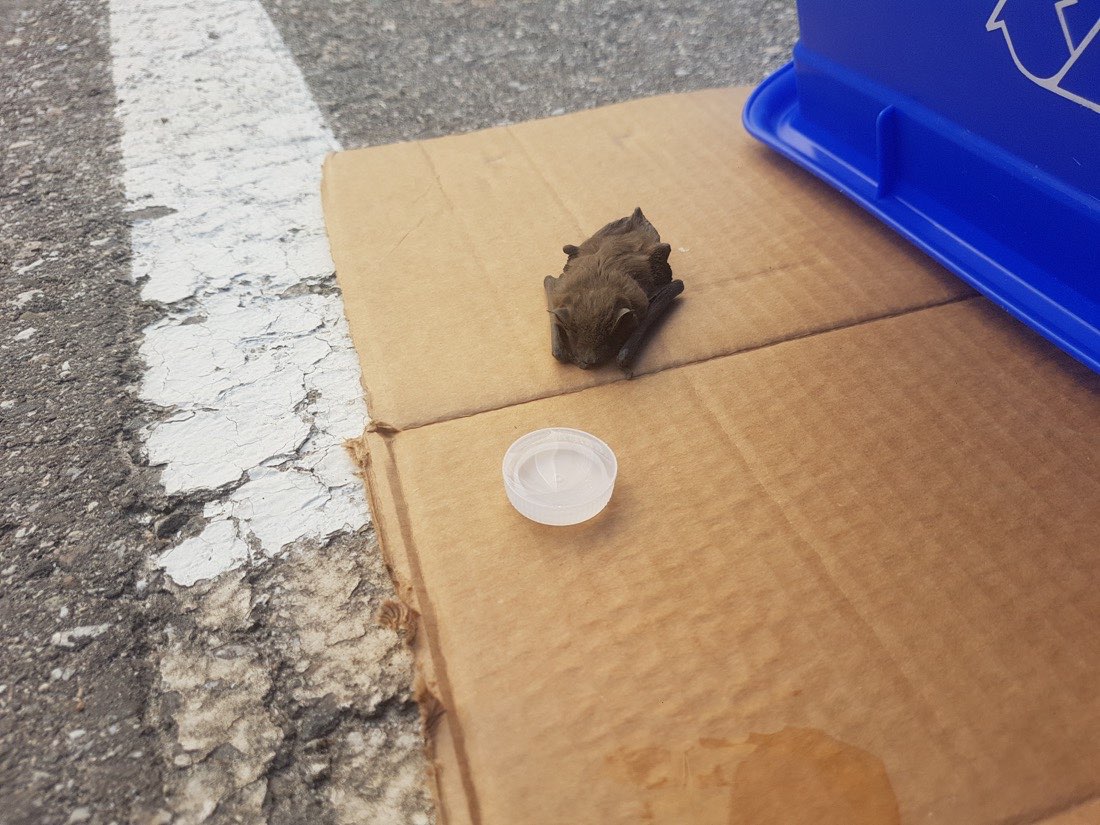
A grounded bat, often a sign it needs help.
Photo: placeholder, to be replaced
Please help us report dead bats and rescue injured ones. What to do depends on whether the bat is injured but alive or dead, choose your situation below. Either way, keep children and pets away and never handle a bat with bare hands.
A visibly hurt bat, bleeding, a broken wing, or unable to move, needs a rehabilitator. Act quickly, but safely.
Contact a local rehabilitator if there is one near you, to see if they can help. Please also report the injured bat to one of our regional coordinators or via the online web form, take a photo and send it to us.
If the bat turns out to be dead, it may still be collected for testing, report it to us and we’ll provide next steps. Unsure what to do? Contact us directly.
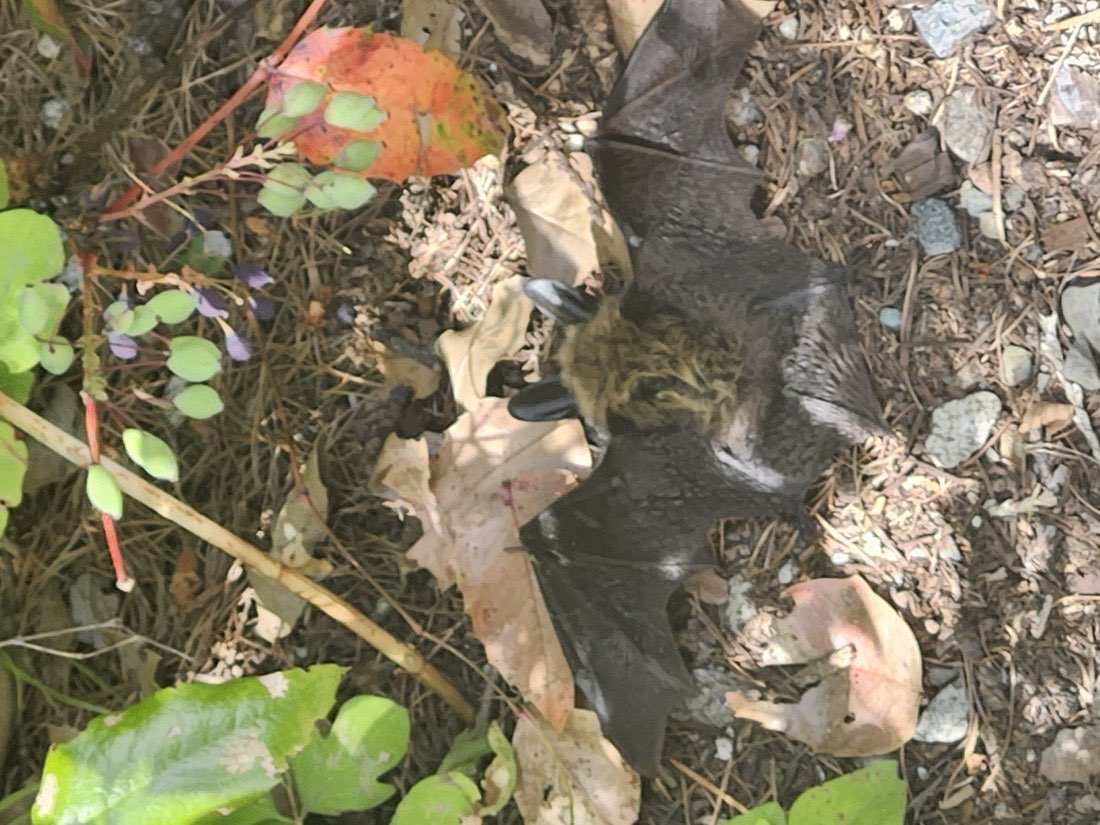
Dead bats may be collected as part of the province’s routine wildlife disease monitoring. But first, make sure it’s really dead, and not just in torpor.
Bats use torpor year-round to save energy, lowering their body temperature and metabolism until they appear dead. In reality they’re in a deep sleep. Observe the bat for a full minute:
If you’re confident the bat is dead, call the BC Community Bat Program or your local Fish & Wildlife office. Dead bats may be collected for the province’s routine wildlife disease monitoring.
What we ask you to report shifts with the seasons. Whenever in doubt, send it, a photo helps.
Nov 1 to May 31. Report any dead bat, and report winter bat activity, live bats flying or hibernating.
Report your sighting →Report injured bats (attach a photo if you can), and report dead bats if you find more than two in the same area.
Report your sighting →Injured, dead, or just unsure, telling us helps monitor BC’s bats and get help where it’s needed. Got a photo? Even better.