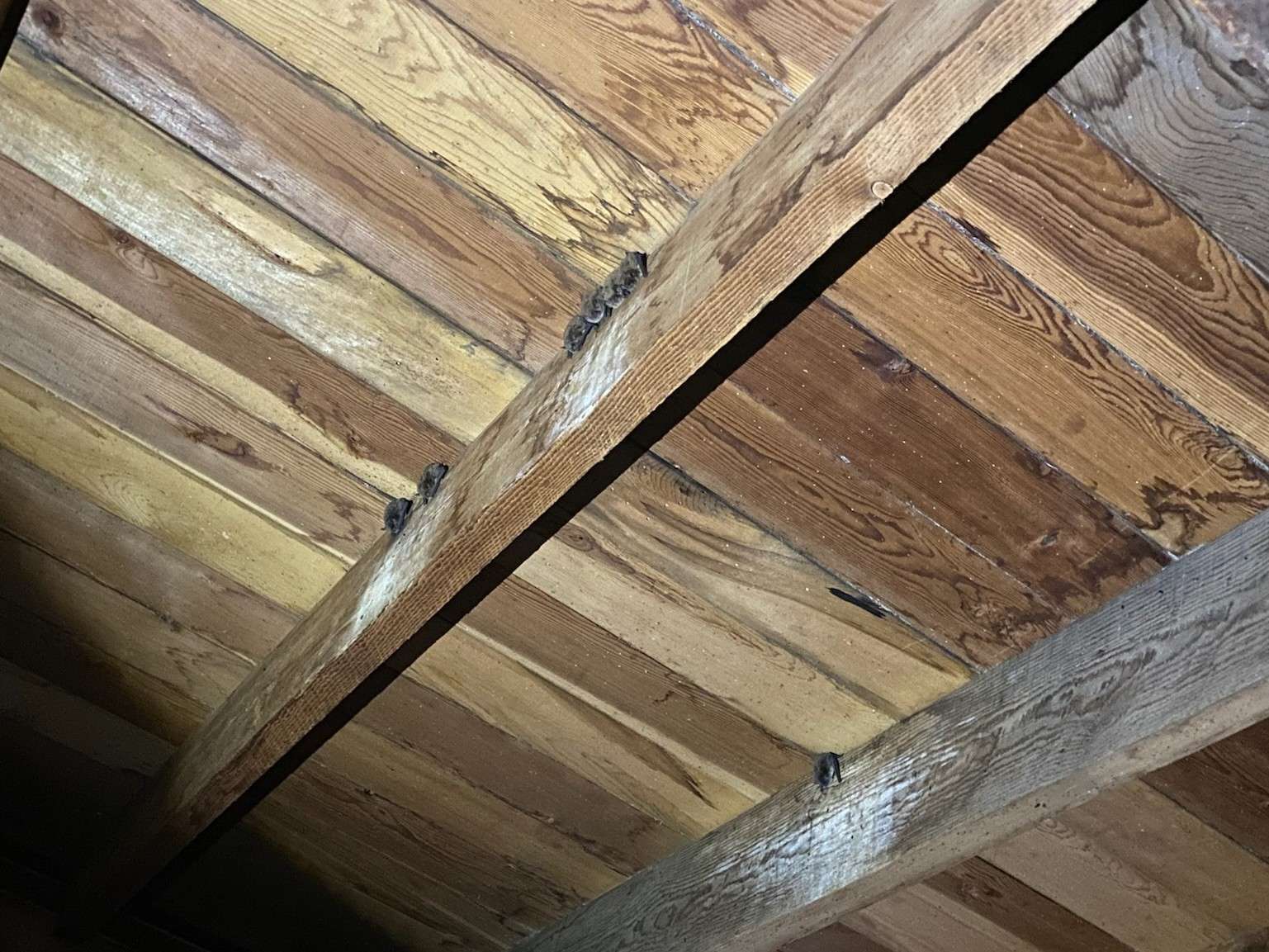

All of British Columbia’s bats are insect eaters, and many of the insects they hunt are the same pests that farmers and orchardists work hard to control. A single bat can catch huge numbers of insects in one night, and a whole colony, night after night through the growing season, adds up to real protection for crops. Welcoming bats onto your land is one of the simplest, cheapest, and most natural forms of pest control there is.
Predators of crop pests.
Bats are important predators of night-flying insects, and many of those insects are serious agricultural pests. Big brown bats in particular have a taste for some of the beetles and bugs that do the most damage in fields and gardens.
Cucumber beetles
A pest of cucumbers, squash, and other crops, and the larvae feed on roots underground.
June bugs
The heavy, blundering beetles of early summer, whose grubs chew through lawns and crop roots.
Stinkbugs
Shield-shaped bugs that pierce and blemish fruit and vegetables as they feed.
Leafhoppers
Tiny sap-suckers that weaken plants and can spread disease from row to row.
What a colony eats.
The scale of insect control that bats provide is hard to picture until you count it. Over a single summer, a modest colony of 150 big brown bats works its way through tens of thousands of crop pests.
~38,000 cucumber beetles
Eaten in a summer by a colony of 150 big brown bats.
~16,000 June bugs
Removed from the same colony’s territory over one growing season.
~19,000 stinkbugs
Caught before they could pierce and spoil ripening fruit and vegetables.
~50,000 leafhoppers
Kept in check across the fields the colony hunts each night.
The knock-on effect
Every pest a bat eats is one that never breeds. Controlling those 38,000 cucumber beetles alone is estimated to prevent roughly 33 million cucumber beetle larvae from hatching in the soil, larvae that would otherwise feed on crop roots.
What it’s worth
- US studies value the pest-control service bats provide to agriculture at about $74 per acre.
- Across the country, that adds up to an estimated $3.7 billion a year in avoided crop damage and pesticide costs.
- A single colony of 100 bats can eat around 350,000 insects in one night.
Make room for your night shift.
Encouraging bats onto your land costs little and pays back in pest control. A few small changes make a farm, orchard, or acreage far more welcoming to the bats already living nearby.
How farmers can help
- Reduce pesticide use. Bats are sensitive to chemical residues, and spraying removes the very insects they feed on. Letting bats do more of the work protects the whole system.
- Keep snags and old trees. Dead and dying trees, hollow limbs, and loose bark give bats natural places to roost. Leave them standing where it’s safe to do so.
- Protect water. Ponds, sloughs, ditches, and stock troughs give bats a place to drink and draw in the insects they hunt. Keep some open water on the land.
- Put up bat boxes. Where natural roosts are scarce, a well-placed bat box gives a colony a home right next to your fields.