
Migratory bats
Three species, the Eastern Red Bat, Hoary Bat, and Silver-haired Bat, migrate south for winter. They’re larger and furrier than other BC bats, with fur even on their tails to keep warm on long flights.
From the urgent (you’ve been touched or bitten) to the everyday (a bat in your house), fast guidance for every kind of encounter.
Bats roost in attics, awnings, barns, sometimes for decades. Here’s how to coexist safely, manage a colony, or report one on a property you’re buying or selling.
Bat biology, BC’s 15 species, real-world safety, white-nose syndrome, and the conservation science that shapes our work.
See all in About bats →Summer evening bat counts, acoustic surveillance, ambassador training, Bat-Friendly Community certification, bat boxes. The province-wide network runs on people.
See all in Help bats →Guides, downloads, and outreach materials tailored to who you are, a homeowner, a teacher, a kid, an industry partner.
See all in Resources →Reach a regional coordinator, get in touch with us, browse the latest, or meet the partners and funders behind the work.
Support our work DonateBritish Columbia has the richest diversity of bats in Canada, fifteen species in all, from tiny mouse-eared Myotis to the striking Spotted Bat. Here’s who they are, where they live, and which ones need our help.
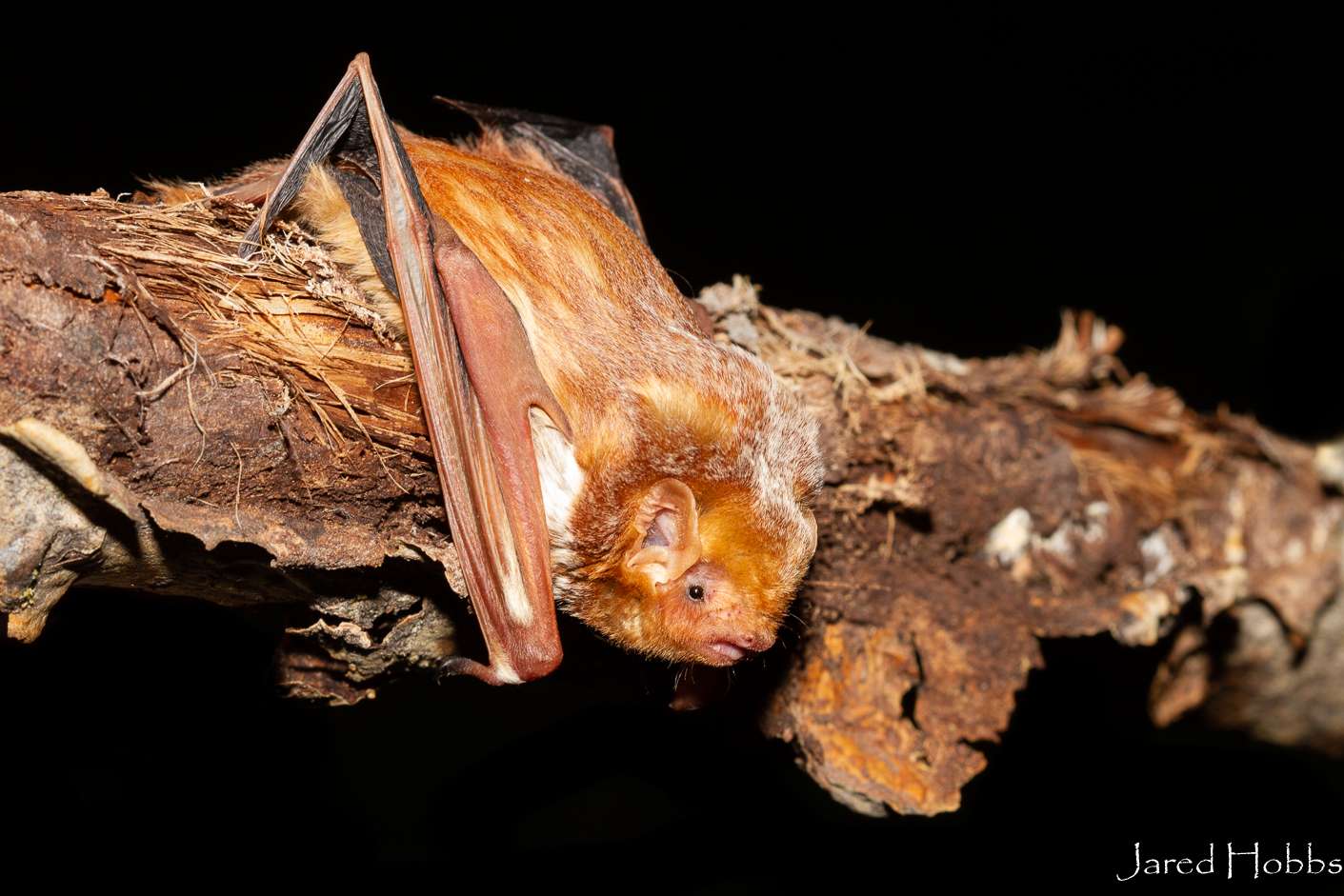
BC is home to more bat species than any other province in Canada.
Photo: placeholder, to be replaced with Silver-haired Bat by Jared Hobbs
There are 15 species of bats in British Columbia, 16 if you count the single record of a Big Free-tailed Bat (Nyctinomops macrotis) that washed up in New Westminster in 1938. Not all of them occur in every part of the province, and there are also accidental records of the Mexican Free-tailed Bat (Tadarida brasiliensis) and the Canyon Bat (Parastrellus hesperus) in BC.
Canada is home to 17 bat species, most of which are found in BC. The one exception is the Tri-colored Bat (Perimyotis subflavus), which lives in the eastern part of the country.
All of BC’s bats can be divided into three groups, the long-distance migrants, the many look-alike Myotis, and a handful of stand-out species that are easier to tell apart.
Three species, the Eastern Red Bat, Hoary Bat, and Silver-haired Bat, migrate south for winter. They’re larger and furrier than other BC bats, with fur even on their tails to keep warm on long flights.
Eight species belong to the genus Myotis, Greek for “mouse-eared.” They’re generally small and look so alike that they’re hard to tell apart at first glance: Little Brown, Yuma, California, Long-eared, Northern, Fringed, Long-legged, and Small-footed Myotis.
The last four belong to different genera and don’t fit the other groups. With distinct looks that make them easier to identify, these are the Spotted Bat, Pallid Bat, Townsend’s Big-eared Bat, and Big Brown Bat.
Every bat known to live in British Columbia, from the endangered Little Brown Myotis to the boldly marked Spotted Bat. Tap any card to open its full field-guide entry, drawn from the Royal BC Museum handbook. Photos are placeholders, to be replaced.
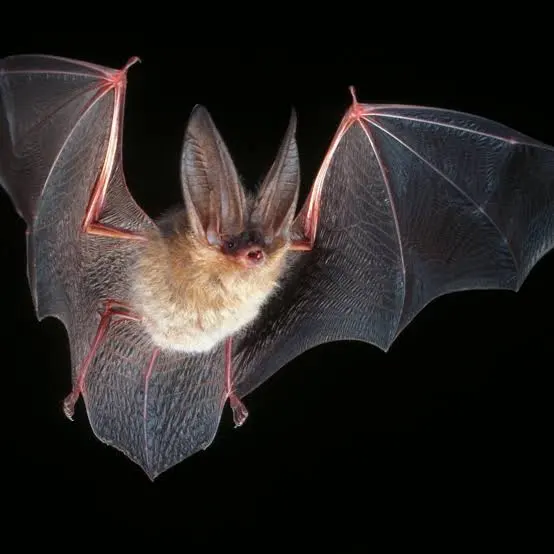
Townsend's Big-eared Bat, Corynorhinus townsendii
Photo: J. Scott Altenbach
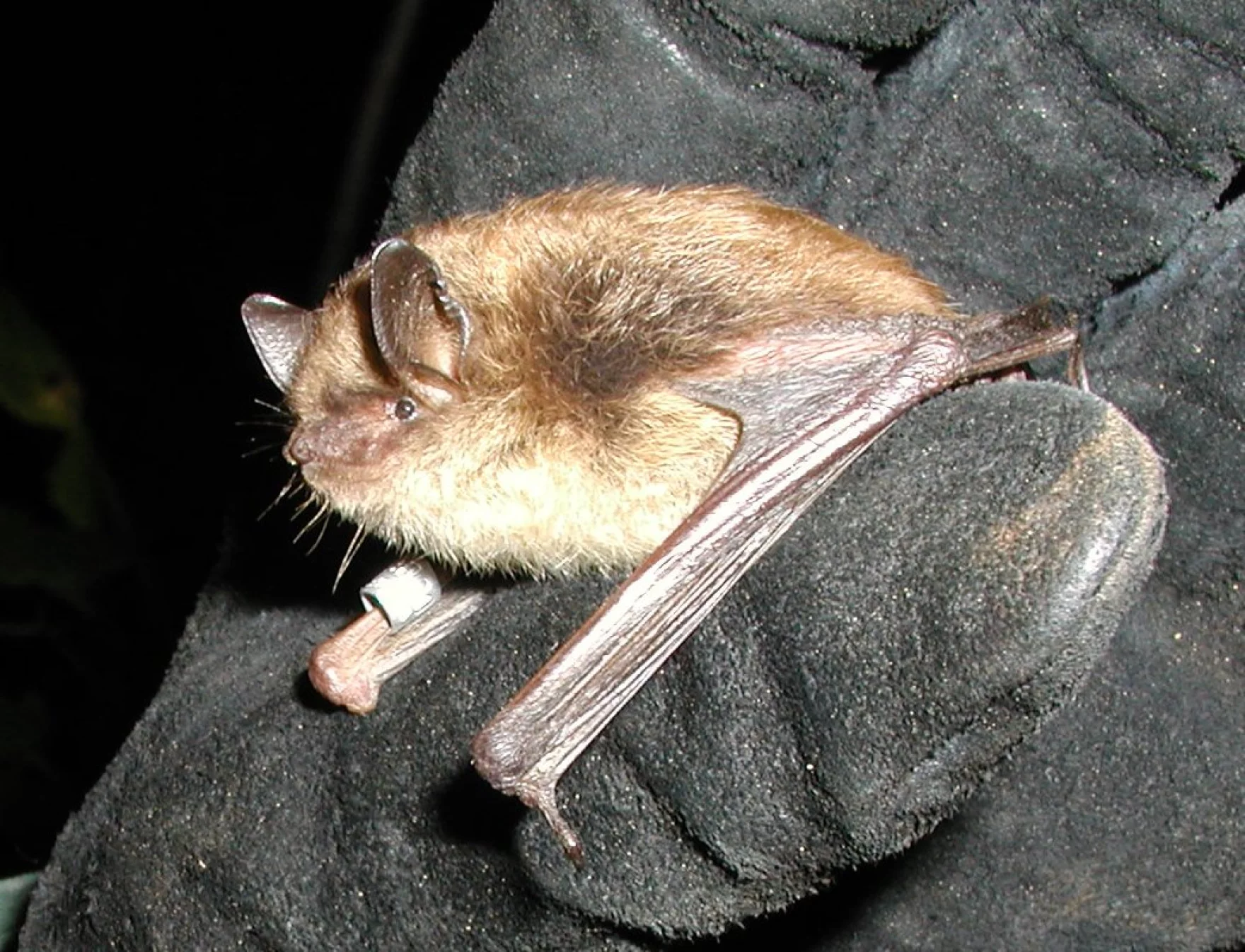
Little Brown Myotis, Myotis lucifugus
Photo: Vermont Fish & Wildlife
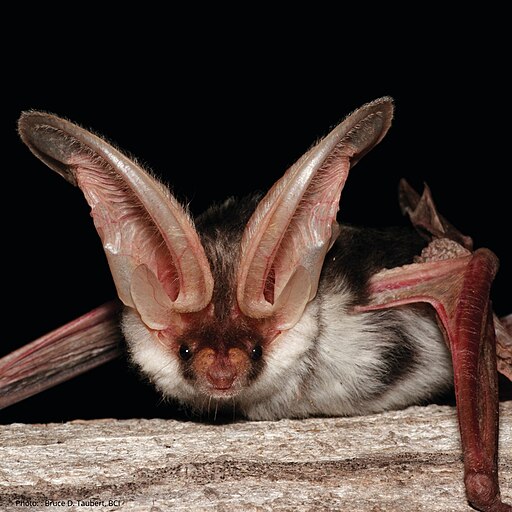
Spotted Bat, Euderma maculatum
Photo: Bruce D. Taubert
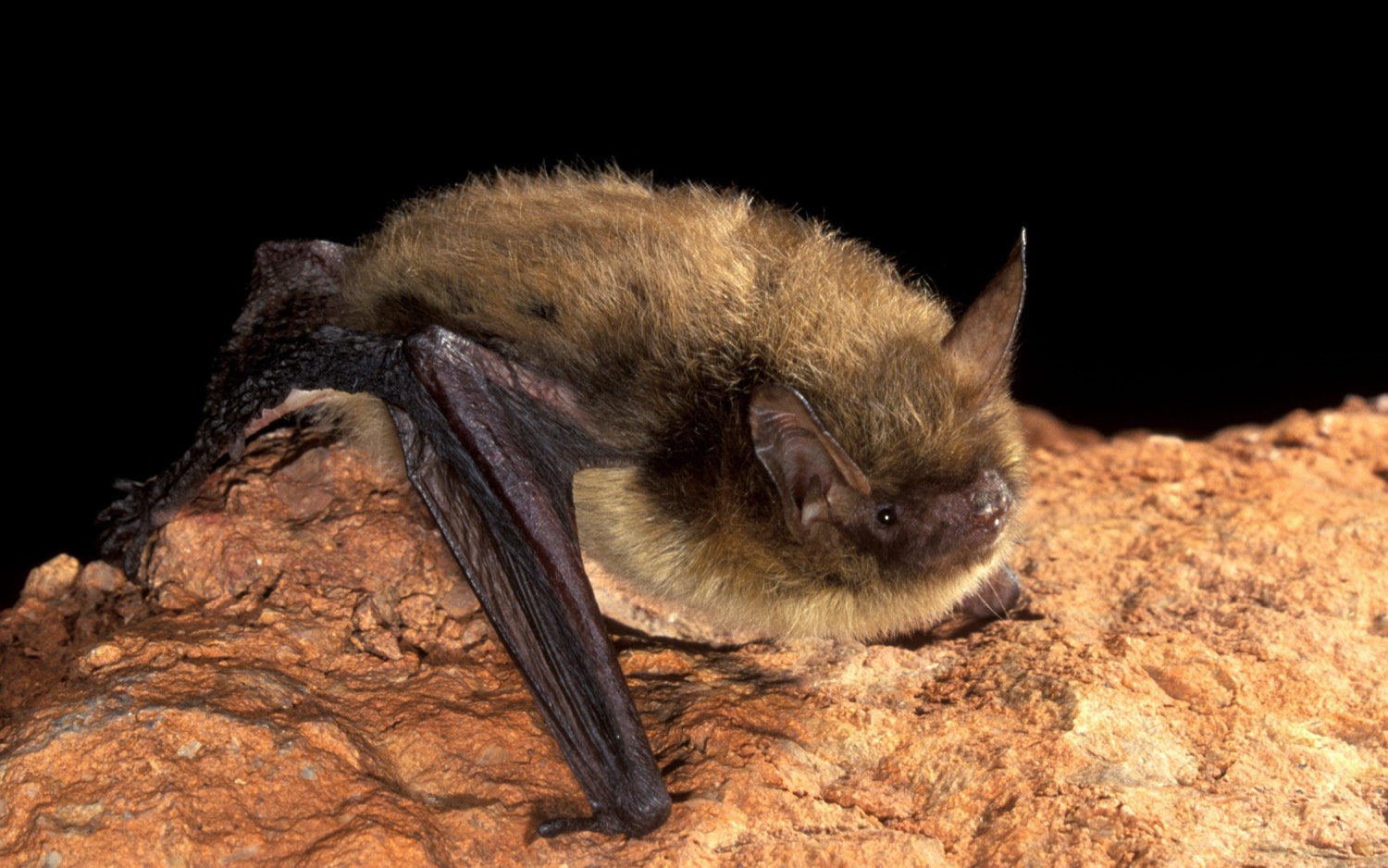
Northern Myotis, Myotis septentrionalis
Photo: Bat Conservation International
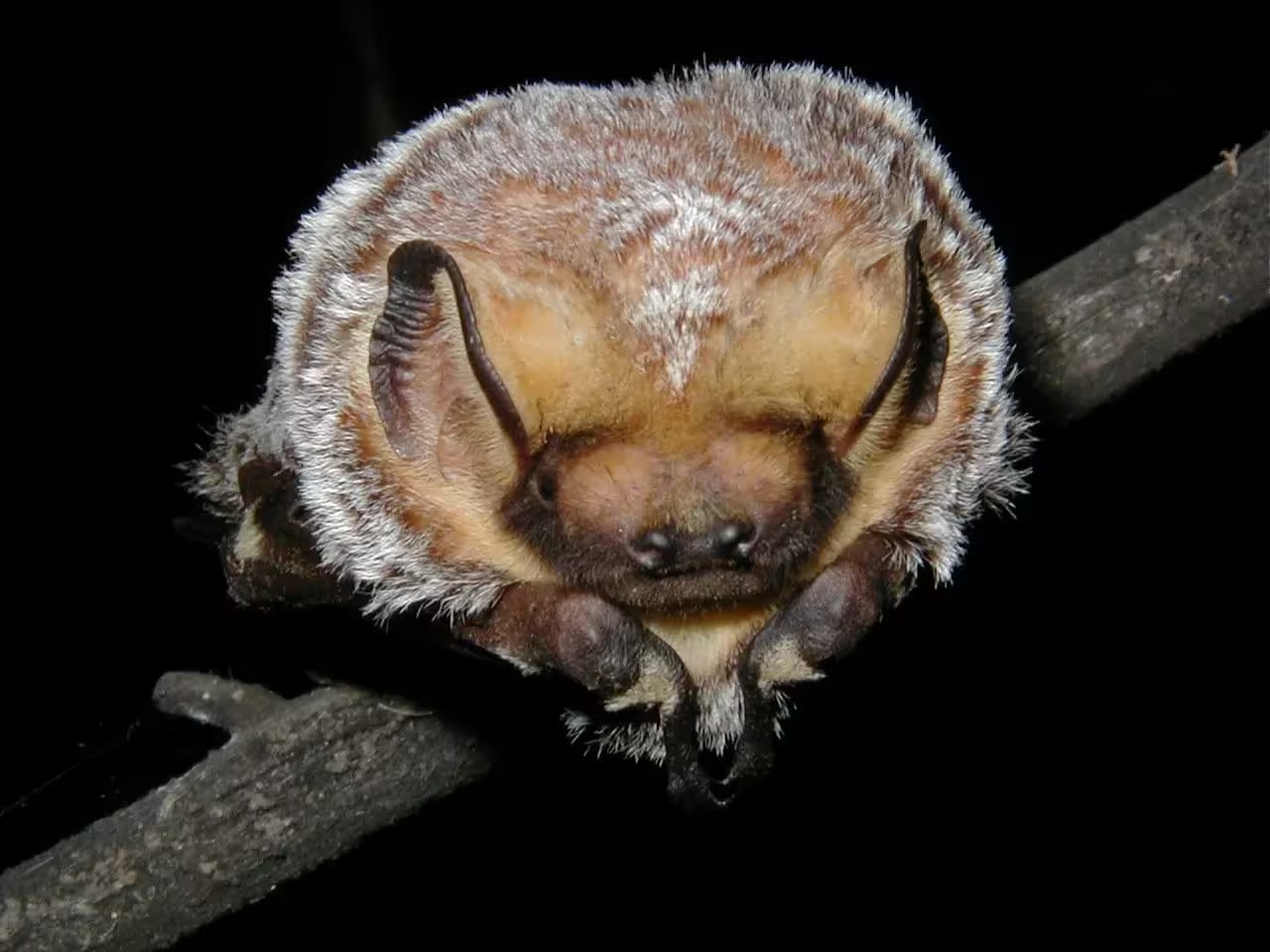
Hoary Bat, Lasiurus cinereus
Photo: Paul Cryan
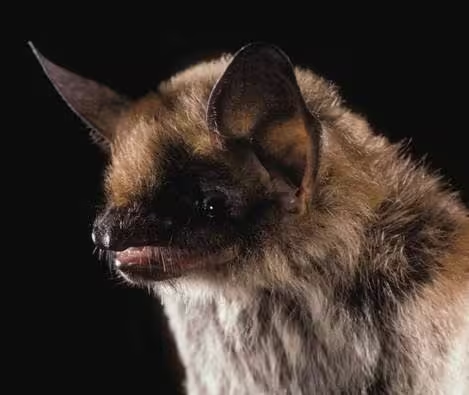
Fringed Myotis, Myotis thysanodes
Image © Merlin D. Tuttle, Bat Conservation International, www.batcon.org
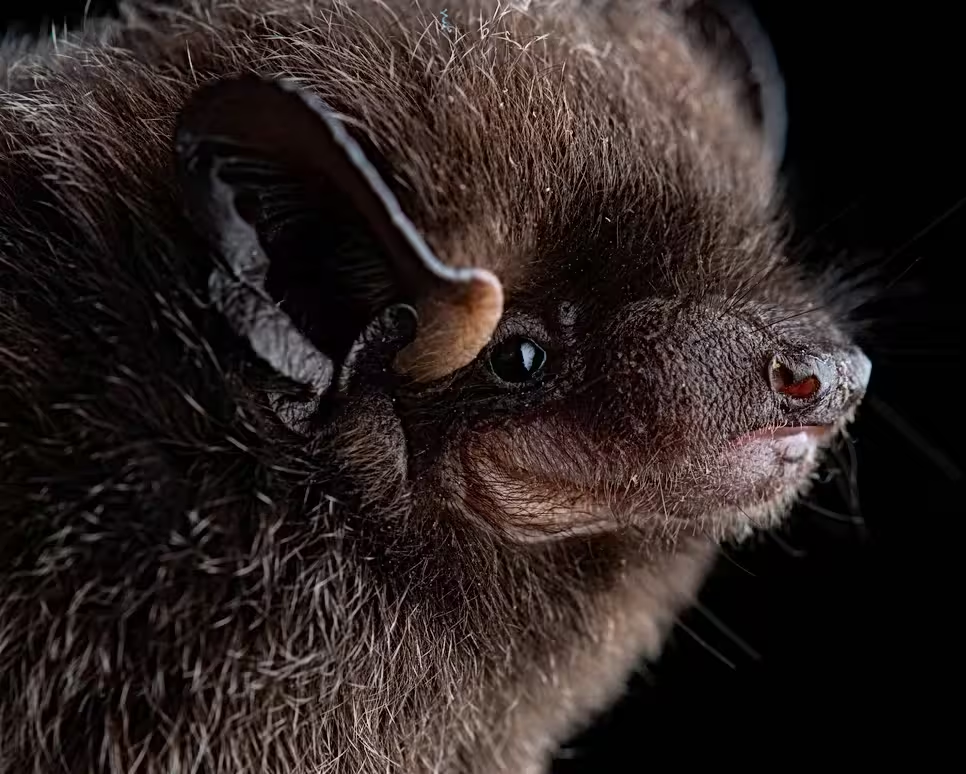
Silver-haired Bat, Lasionycteris noctivagans
Photo: Jose Martinez-Fonseca, NAU
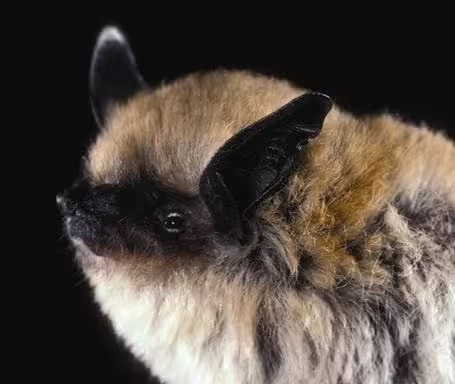
California Myotis, Myotis californicus
Image © Merlin D. Tuttle, Bat Conservation International, www.batcon.org
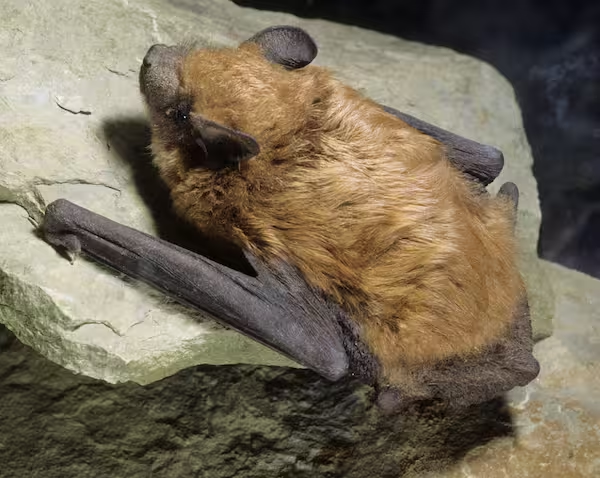
Big Brown Bat, Eptesicus fuscus
Photo: John MacGregor, Land Between the Lakes KY/TN · Public domain
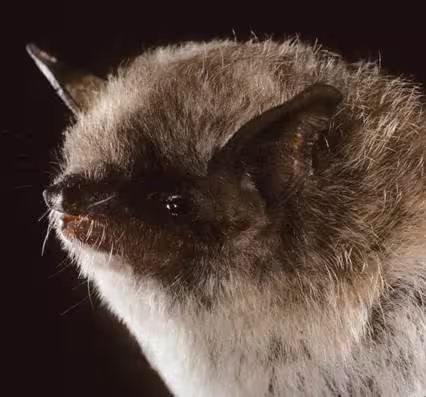
Yuma Myotis, Myotis yumanensis
Image © Merlin D. Tuttle, Bat Conservation International, www.batcon.org
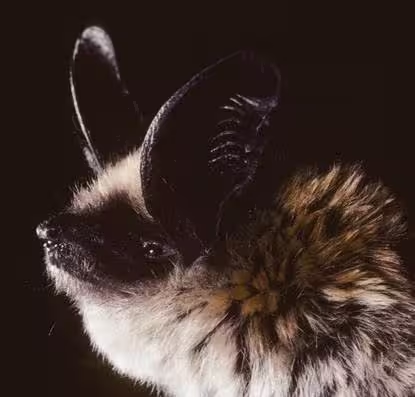
Long-eared Myotis, Myotis evotis
Image © Merlin D. Tuttle, Bat Conservation International, www.batcon.org
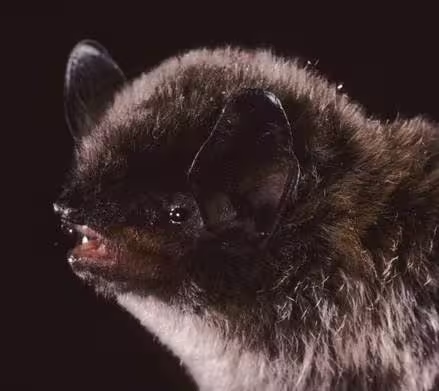
Long-legged Myotis, Myotis volans
Image © Merlin D. Tuttle, Bat Conservation International, www.batcon.org
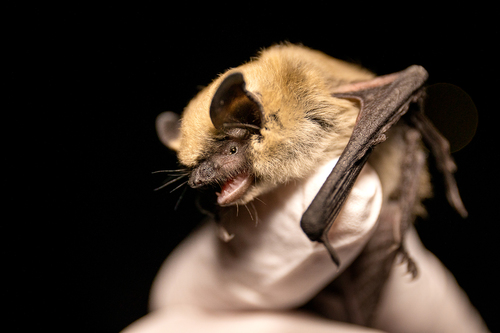
Western Small-footed Myotis, Myotis ciliolabrum
Photo: Jason Headley · fieldguide.mt.gov · CC BY-NC 4.0
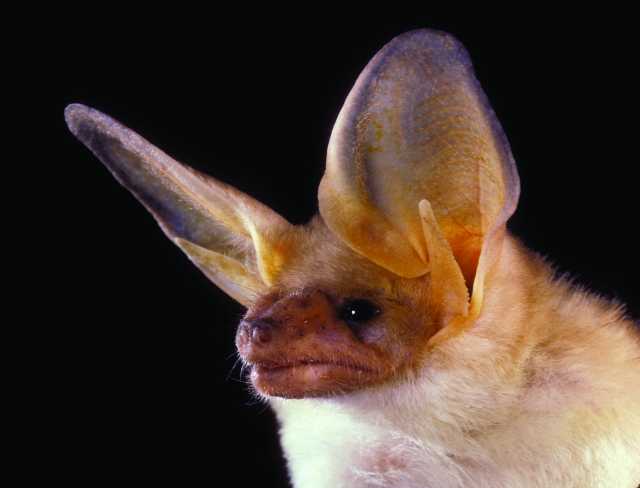
Pallid Bat, Antrozous pallidus
Image © Merlin D. Tuttle
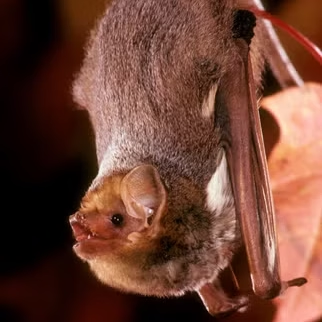
Eastern Red Bat, Lasiurus borealis
Image © Merlin D. Tuttle, Bat Conservation International
Every card carries two listings — national and provincial. What these listings mean ↓ Tap the on a photo for its credit. Species information from Nagorsen & Brigham, Bats of British Columbia (Royal BC Museum).
Every bat is assessed twice — once nationally and once by the Province — and the two can differ. A bat can be Endangered in Canada while sitting on B.C.’s Blue list, so both appear on its card.
Canada’s federal species-at-risk law. A species added to Schedule 1 of the Act receives legal protection.
The independent body that assesses which wild species are at risk in Canada. A COSEWIC assessment carries no legal protection on its own — the species must first be added to Schedule 1 of SARA.
Facing imminent extirpation or extinction.
Eastern Red Bat, Hoary Bat, Little Brown Myotis, Northern Myotis, Silver-haired Bat
Likely to become endangered if the factors limiting the species are not reversed.
Pallid Bat
May become threatened or endangered because of a combination of biological characteristics and identified threats.
Spotted Bat
Too little information exists to assess the species’ risk of extinction, so no status has been assigned.
Fringed Myotis
Not currently assessed as being at risk nationally.
Big Brown Bat, California Myotis, Long-eared Myotis, Long-legged Myotis, Townsend's Big-eared Bat, Western Small-footed Myotis, Yuma Myotis
The B.C. Conservation Data Centre assigns every native species to a list based on its provincial conservation status.
Any native species that is Extirpated, Endangered or Threatened in British Columbia, or a candidate for that status. Extirpated species no longer exist in the wild in B.C. but do occur elsewhere. Not every Red-listed species will go on to be formally designated — the list flags them as at risk and requiring investigation.
Pallid Bat
Any native species considered to be of Special Concern in British Columbia. These species have characteristics that make them particularly sensitive or vulnerable to human activities or natural events. They are at risk, but are not Extirpated, Endangered or Threatened.
Fringed Myotis, Hoary Bat, Little Brown Myotis, Northern Myotis, Spotted Bat, Townsend's Big-eared Bat, Western Small-footed Myotis, Yuma Myotis
Species that are apparently secure and not at risk of extinction. A Yellow-listed species may still have Red- or Blue-listed subspecies.
Big Brown Bat, California Myotis, Long-eared Myotis, Long-legged Myotis, Silver-haired Bat
No provincial list status has been assigned. In B.C. this applies to species that occur only as rare or accidental visitors, so a provincial conservation status rank does not apply.
Eastern Red Bat
British Columbia’s diverse landscapes make it one of the most biodiverse provinces in Canada. Bats range as far north as the Yukon border and west along the coast and islands.
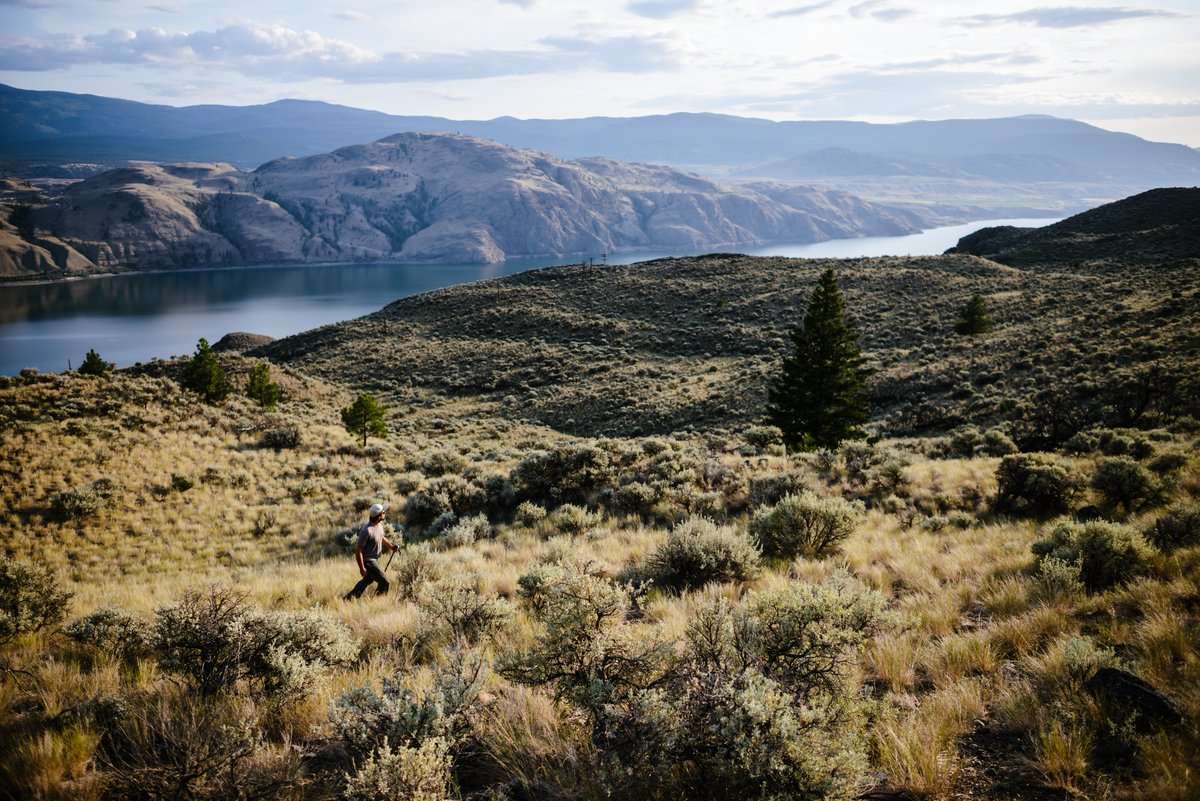
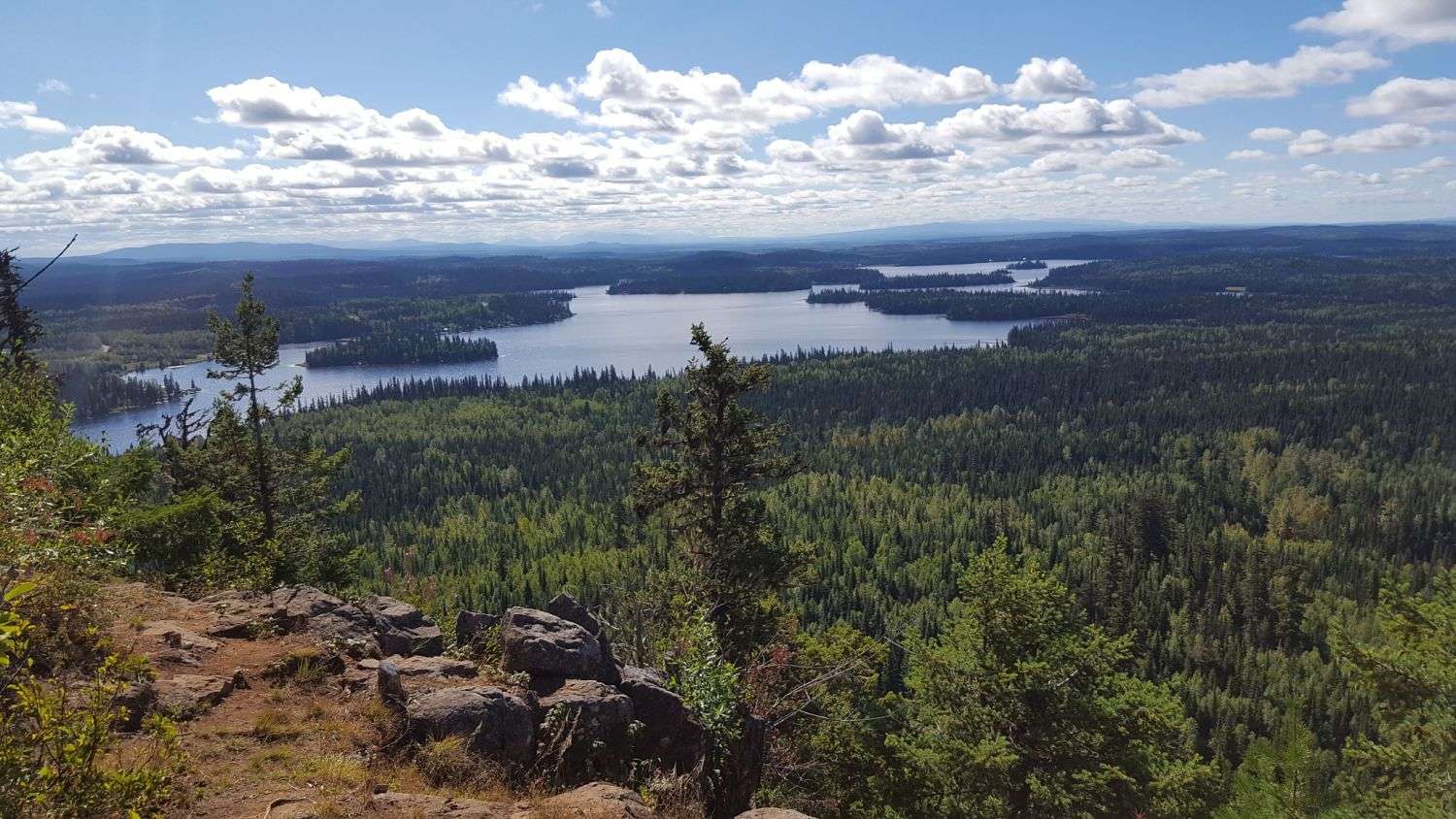
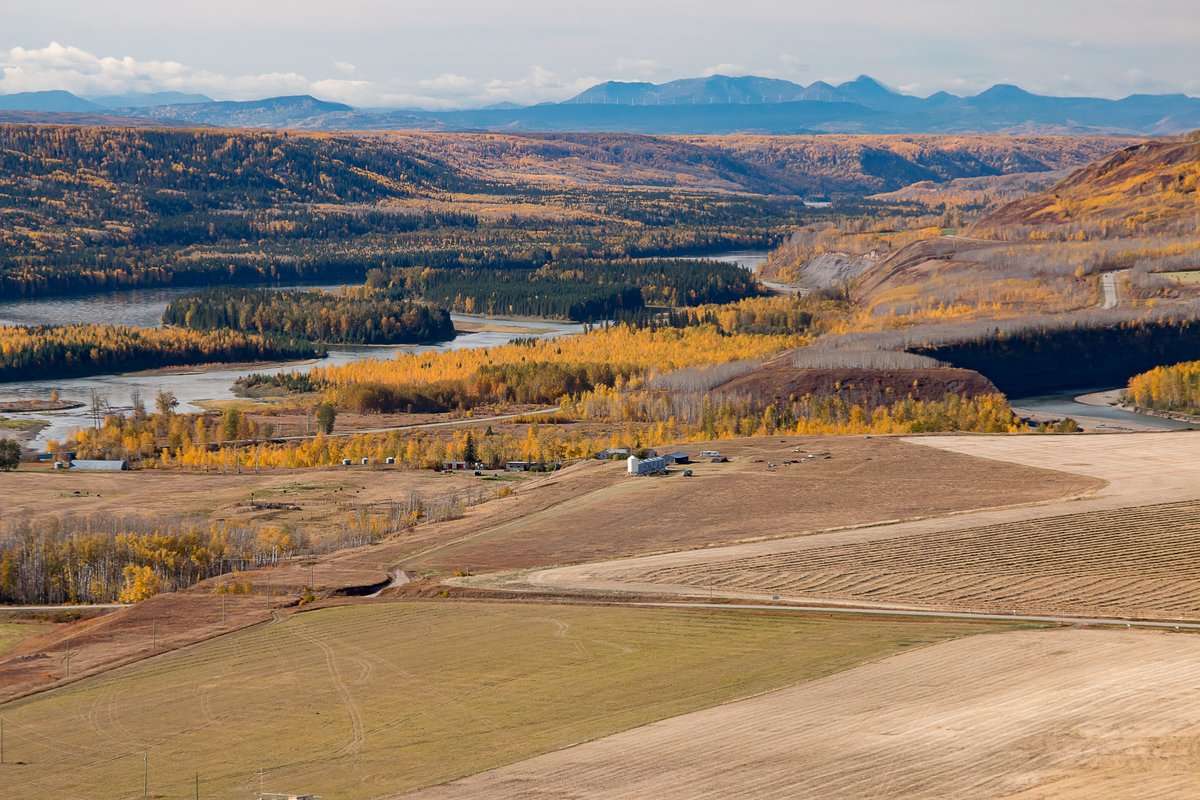
The southern interior (Thompson, Okanagan, and Cariboo) supports the highest diversity of bats. Choose your region to see exactly which species live there:
 Vancouver IslandSouth Vancouver Island
 Vancouver IslandMid Vancouver Island
 Vancouver IslandNorth Vancouver Island
 Gulf IslandsSalt Spring Island
 Gulf IslandsGaliano & Saturna Islands
 Gulf IslandsPender Island
 Gulf IslandsMayne Island
 Gulf IslandsGabriola Island
 Gulf IslandsThetis Island
 Gulf IslandsDenman & Hornby Islands
 Coast & MainlandSunshine Coast
 Coast & MainlandMetro Vancouver & Sea to Sky
 Coast & MainlandFraser Valley
 InteriorThompson
 InteriorShuswap
 InteriorOkanagan
 InteriorKootenays
 InteriorLillooet
 InteriorCariboo
 NorthOmineca
 NorthPeace
 NorthSkeena
Many roosts in BC are still undiscovered, and our picture keeps evolving as new roosts are reported. If you find summer roosts or overwintering bats, please share your sightings. It helps us learn where each species lives.
All animals in BC, including bats, are protected from harm, illegal hunting, trafficking, keeping, and killing under the BC Wildlife Act. Even so, over half of BC’s 15 bat species are at risk and could be lost without action.
Bats are ranked on two kinds of lists: provincial (BC) and federal (Canada). Provincially, one bat carries the greatest risk of being lost, eight are of special concern, five are at least risk, and one is not listed.
Greatest risk of being lost.
Special concern.
Least risk.
No provincial listing.
Two species are endangered under the federal Species at Risk Act, facing imminent extirpation or extinction; one is threatened, and one is of special concern. The Hoary, Silver-haired, and Eastern Red bats are listed as endangered by COSEWIC and are under review to be added to SARA.
Facing imminent extirpation or extinction.
Likely to become endangered.
May become threatened.
No federal listing.
1 Listed under the Species at Risk Act (SARA).
2 Listed by the Committee on the Status of Endangered Wildlife in Canada (COSEWIC).
Go deeper on BC’s bats, their biology, diversity, and how to protect them.
Everything linked to this page — free to open and share.
Every report helps us map where BC’s 15 species live and how they’re doing, especially the more than half that are at risk. Got a photo? Even better.