
The golden rules.
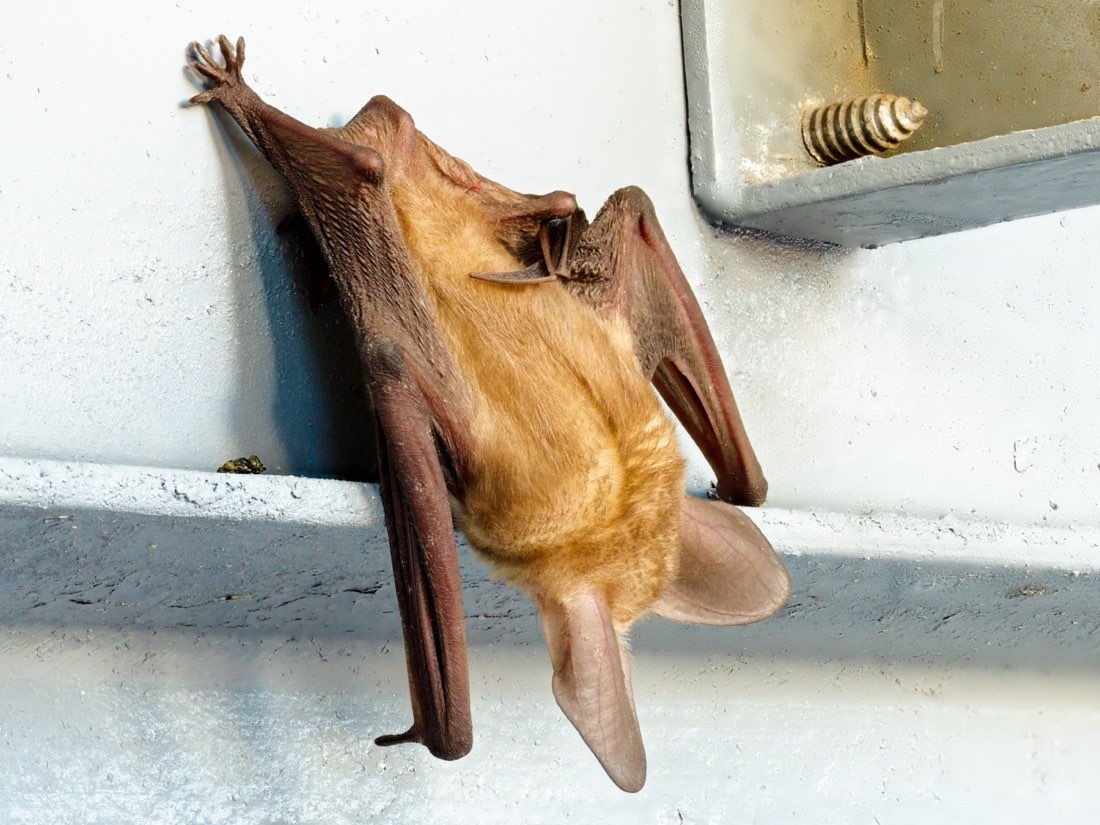
Bats are not pests and not aggressive, they will not intentionally attack people or other animals. Like all wild animals, though, they’re best admired from a distance and never handled. Keep these few rules in mind and you’ll rarely have anything to worry about.
Every time you’re near a bat
- Keep your hands off. Leave the bat alone and let it be, handling stresses the animal and is the only real way to put yourself at risk.
- Keep children and pets well back. Curious kids and cats or dogs are the most common reason contact happens at all.
- Treat a grounded bat with extra caution. A bat on the ground is more likely to be sick or hurt, though in late summer it may simply be a young bat learning to fly. Either way, don’t pick it up bare-handed.
- Remember they’re protected. All BC bats are protected under the BC Wildlife Act. It’s illegal to harass, harm, or kill them, and they cannot be intentionally exterminated.
A bat that has flown indoors will usually leave on its own if you open doors and windows to the outside and give it a clear path out. If it can’t, see Found a bat for how to guide or contain it safely.
If there’s been contact.
Direct contact is rare, but it’s the moment to act calmly and promptly. Contact means a bite or scratch, or any touch involving a bat’s saliva or blood through a break in the skin, even a tiny one. In any of these cases, contact your local health authority right away. Find the situation that matches yours.
Rabies & disease, briefly.
Bats are the only mammal in BC that normally can carry the rabies virus, but the incidence in the free-flying bat population is estimated at less than 1%, and the risk to people is low and negligible when the golden rules are followed. Since 1950 there have been only six bat-related rabies deaths in all of Canada.
Rabies
Rare, and only passed through direct contact with an infected bat’s saliva or blood. Keeping your distance, and your pets’ vaccinations current, keeps the risk negligible. See Bats & human health for detail.
Hantavirus
Not a bat concern. In BC, deer mice, not bats, are the only animals known to spread hantavirus.
West Nile virus
Bats don’t transmit West Nile virus to people or other animals, that’s spread by infected mosquitoes. Bats are “dead-end” hosts.
None of this is reason to fear or evict a healthy colony. As the CDC puts it, some bats live in buildings, and there’s no reason to move them out if there’s little chance of contact with people. For the complete picture, including the signs of a sick bat, read Bats & human health.
Guano safety.
Bat guano is not poisonous, it’s simply chewed and digested insect parts, and contains no toxins. In fact, it makes an excellent garden fertilizer. As with the droppings of any animal, the only sensible precaution is to avoid breathing in the dust.
Under warm, humid conditions a fungus called Histoplasma capsulatum can grow in animal droppings and, in rare circumstances, be inhaled by people. In BC, wet bird droppings, like those in chicken or pigeon coops, are far more favourable to it than the dry guano piles found at bat colonies. In fact, there has never been a documented case of histoplasmosis from bat droppings in BC.
Clearing a large accumulation
- Wear appropriate respiratory protection, a filter that removes particles as small as two microns, as a precaution, not because the guano is poisonous.
- Dampen the guano first: spray it lightly with water or a 10% bleach solution before sweeping, to keep dust from becoming airborne.
- Keep children and pets out of the area while you work, and ventilate enclosed spaces.
For a small night roost, a carport or covered doorway where a few droppings gather each morning, a shelf or gutter below the spot catches guano before it falls, and what you sweep up can go straight onto the garden.