
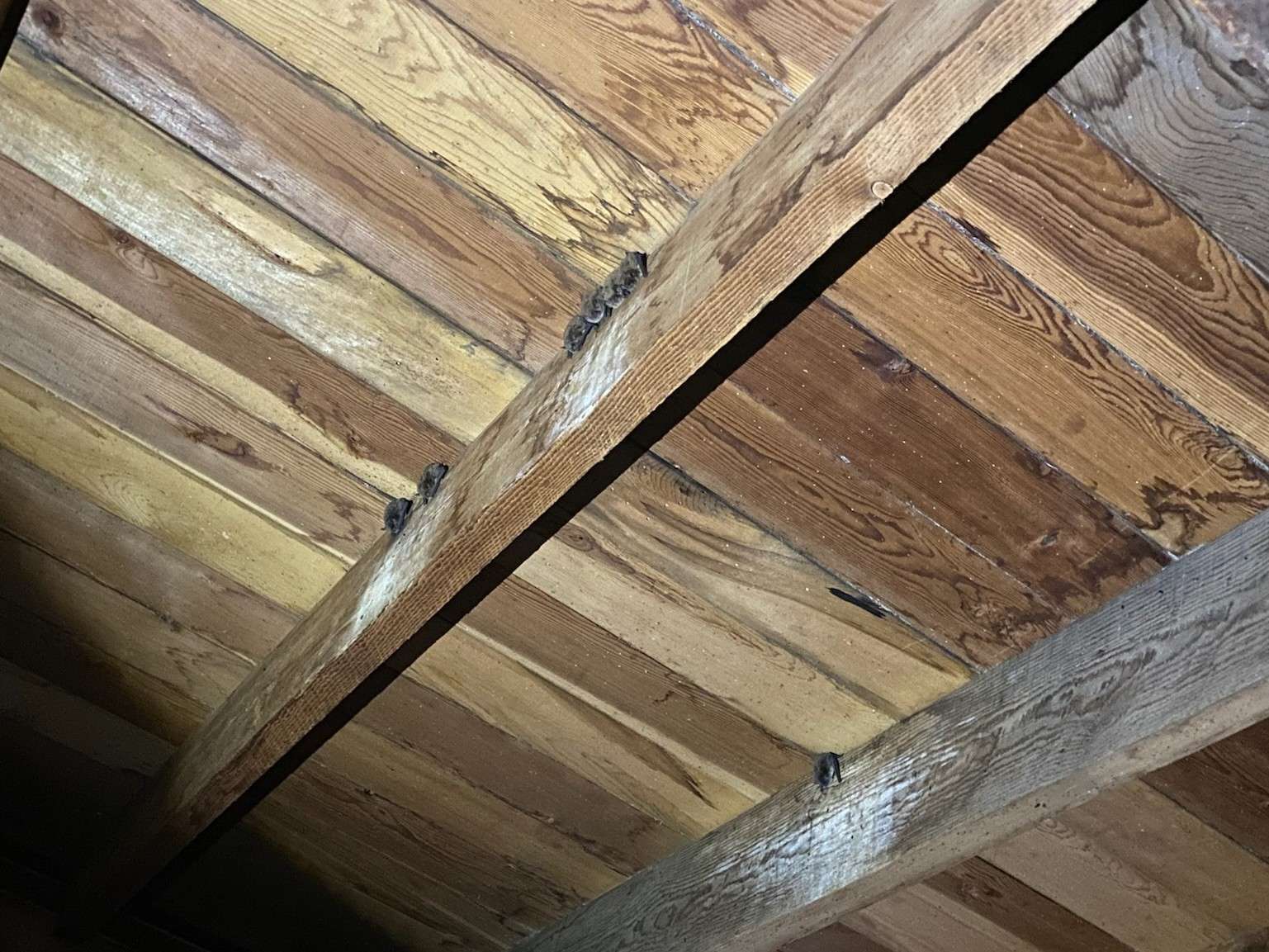
Read the DNA in the droppings.
Bat guano samples can be collected to identify bat species through DNA analysis, a simple, hands-off way to find out who is living in a roost. To date, we’ve analyzed samples from across the province and documented seven species of bats roosting in buildings and bat boxes.
If you have a roost in a building or bat box, a pinch of dry droppings is all it takes to add your site to that picture, and to help us track where each species is found.
Not sure which species you might have? See the bats of BC.
Collect, label, send.
Collecting a sample is quick and needs no special equipment. Work through these three steps.
- Collect. Gather a small amount of dry droppings from beneath the roost. Detailed step-by-step instructions are set out in the DNA Sampling Protocol for Bat Guano, ask your regional coordinator for a copy before you start.
- Label. Mark each sample with the collection date, the location, and your name.
- Send. Mail dry samples to your regional coordinator, or to the address below.
Where to send samples
Mail your dry, labelled samples to your regional coordinator, or to:
Paula Vega
158 McDonald Pl.
Penticton, BC, V2A 1L8
Timing & priorities.
Guano can be collected throughout the summer months, with samples due in late August.
Testing is funding-dependent, so priority is given to sites with ongoing participation in the BC Annual Bat Count. Taking part in the count and collecting guano at the same roost is the best way to make sure your sample is analyzed.
Thank you for taking part in this citizen science project, every sample helps build a clearer map of BC’s bats.