
Bats are an important part of healthy neighbourhoods across British Columbia. They eat hundreds of insects each night, support balanced ecosystems, and their guano returns nutrients to the soil. Most bats roost in forests and natural habitats, but some species sometimes use buildings.
The BC Community Bat Program works with homeowners to answer questions about bats on their property, offer guidance on safe coexistence, and support humane exclusion where coexistence isn’t possible. We promote Best Management Practices that protect both people and bats.
One bat, don’t panic.
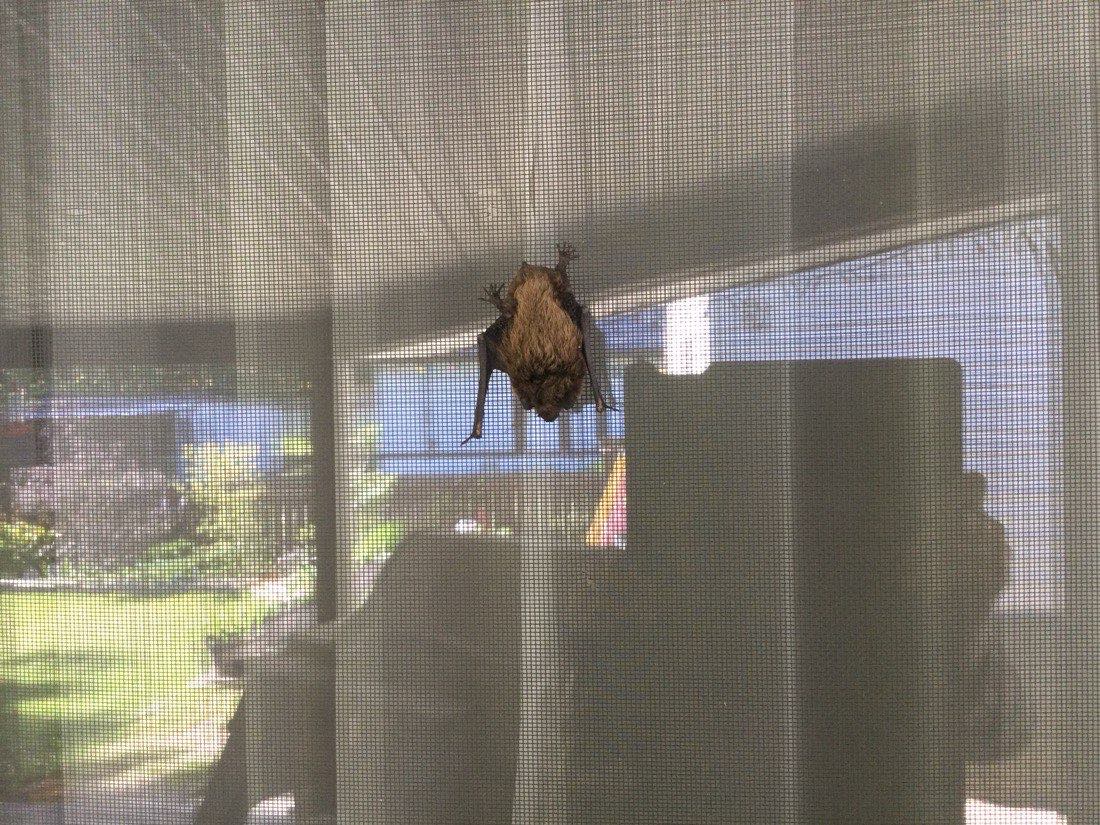
If you find a single bat inside your home, or resting in an awning, patio umbrella, or on the outside of your building, there’s no need to worry. Follow the guidance for your specific situation.
Explore our pages for what to do
- I’ve found a bat inside my house, including what to do if you keep finding them and want to bat-proof your living space.
- A bat outside, on the wall or ground, keep your distance and contact your regional coordinator if it’s low down or looks hurt.
- Bats in awnings or patio umbrellas, take care not to disturb them.
You may have a colony.
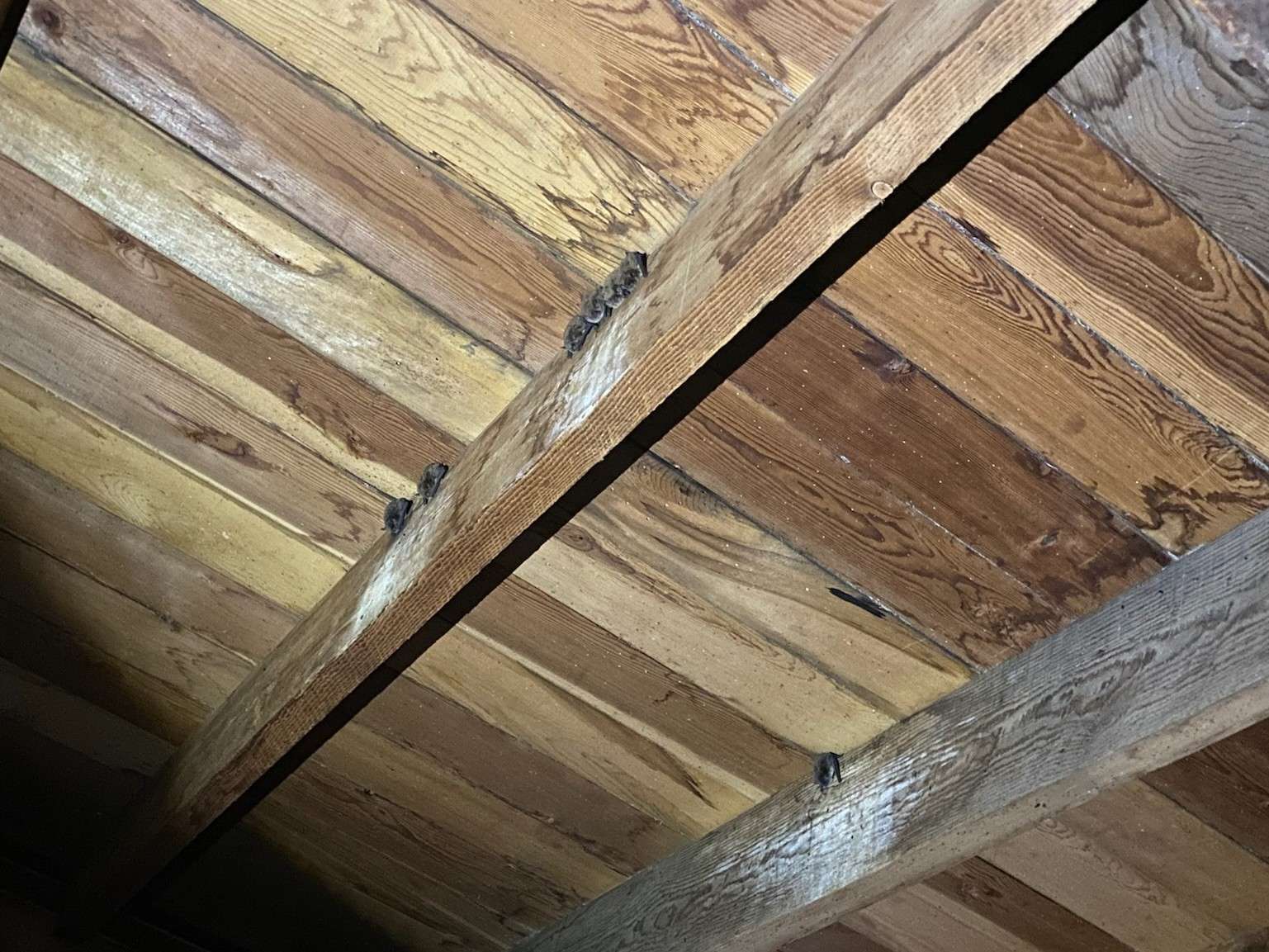
Have you discovered several bats in your attic, barn, cabin, or garage, or heard scratching or squeaking from the roof, chimney, siding, or attic? If you find three or more bats roosting together, you might have a bat colony.
Bat colonies are usually present only in spring, summer, and fall; in warmer regions of BC they may overwinter in buildings, too. Unlike mice, bats don’t chew on wood or wires and they don’t reproduce rapidly, females have just one pup a year, and half of the pups don’t survive their first winter. Many homeowners decide to let the bats stay, depending on the situation.
We encourage you to read through our resources to learn about bats and assess your situation. Explore the pages below, or contact your regional coordinator to discuss your options. Please also report your roost to us, in some regions of BC, biologists from your local Community Bat Project will visit properties with bats.
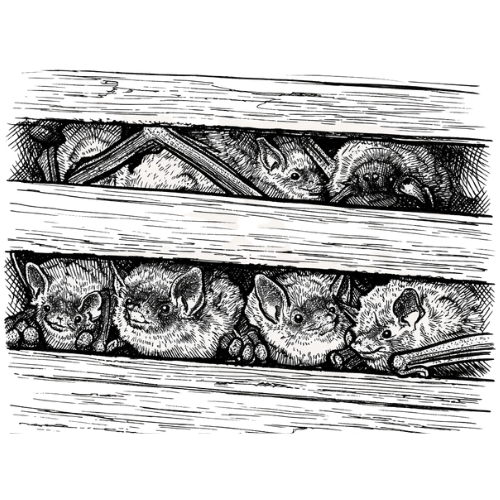
Found a colony? Please report it to us, every roost report helps us monitor BC’s bats.
Droppings, handled well.
You might find bat droppings (guano) in your attic, on the patio, or outside your home. It can be surprising to discover, but guano rarely causes problems for homeowners when it’s handled appropriately.
Is it guano or rodent droppings?
Both are about the size of a grain of rice. Bat guano is typically crumbly and breaks apart easily when pressed, and because bats feed on flying insects it often contains shiny insect parts. Mouse droppings, by contrast, are smooth, firm, and don’t crumble.
How to clean up guano
- Remove accumulated guano annually, after the bats have left for the season (October to March).
- Use appropriate respiratory protection in dusty, enclosed areas, especially with loose insulation or an unknown amount of mouse droppings.
- Replace insulation stained by guano or urine.
- Install plastic or a plywood floor along human access routes and under roosts to catch guano and make annual removal easier. Line the floor with tightly taped plastic to prevent staining.
Outdoors, on a porch or the outside of the building, guano can simply be swept aside. In a high-traffic area, such as a front entrance or deck, deflect or catch it by installing a shelf, rain gutter, or planter below the roost site. After years of bats coming and going, the entry area often becomes stained; avoid this by cleaning it annually in the fall, once the bats have left. Bat guano also makes an excellent fertilizer for the garden.
Curious which bat species may be roosting on your property? You can collect a small guano sample for genetic identification, contact your regional coordinator to learn how to submit one.
Make your yard welcoming.
Want your home and backyard to be bat-friendly? A few thoughtful choices protect the bats already visiting your property, and invite more.
Protect existing roosts
Keep active roosts safe: minimize noise, lighting, and disturbance, and schedule renovations or building work for October to March, when bats are typically absent. Avoid evicting bats if conflicts can be safely managed.
Living with a colony →Grow natural habitat
Retain large, decaying trees where it’s safe and leave part of the trunk standing if a tree must come down. Plant native trees like aspen or cottonwood, add a night-blooming “moon garden” to draw moths, protect wetlands and calm water, and avoid herbicides, pesticides, and insecticides.
Add a bat box thoughtfully
Install a box only where habitat has been lost or an exclusion is planned, and put it up well before excluding, so displaced bats have somewhere to go. Follow best practices for box design, location, and maintenance.
Bat boxes →Keep cats indoors, on a leash, or in a catio to reduce predation on bats and birds. And if you have no option but to exclude a colony, follow the best management practices and calendar for timing, see managing a colony.