
Conservation through community.
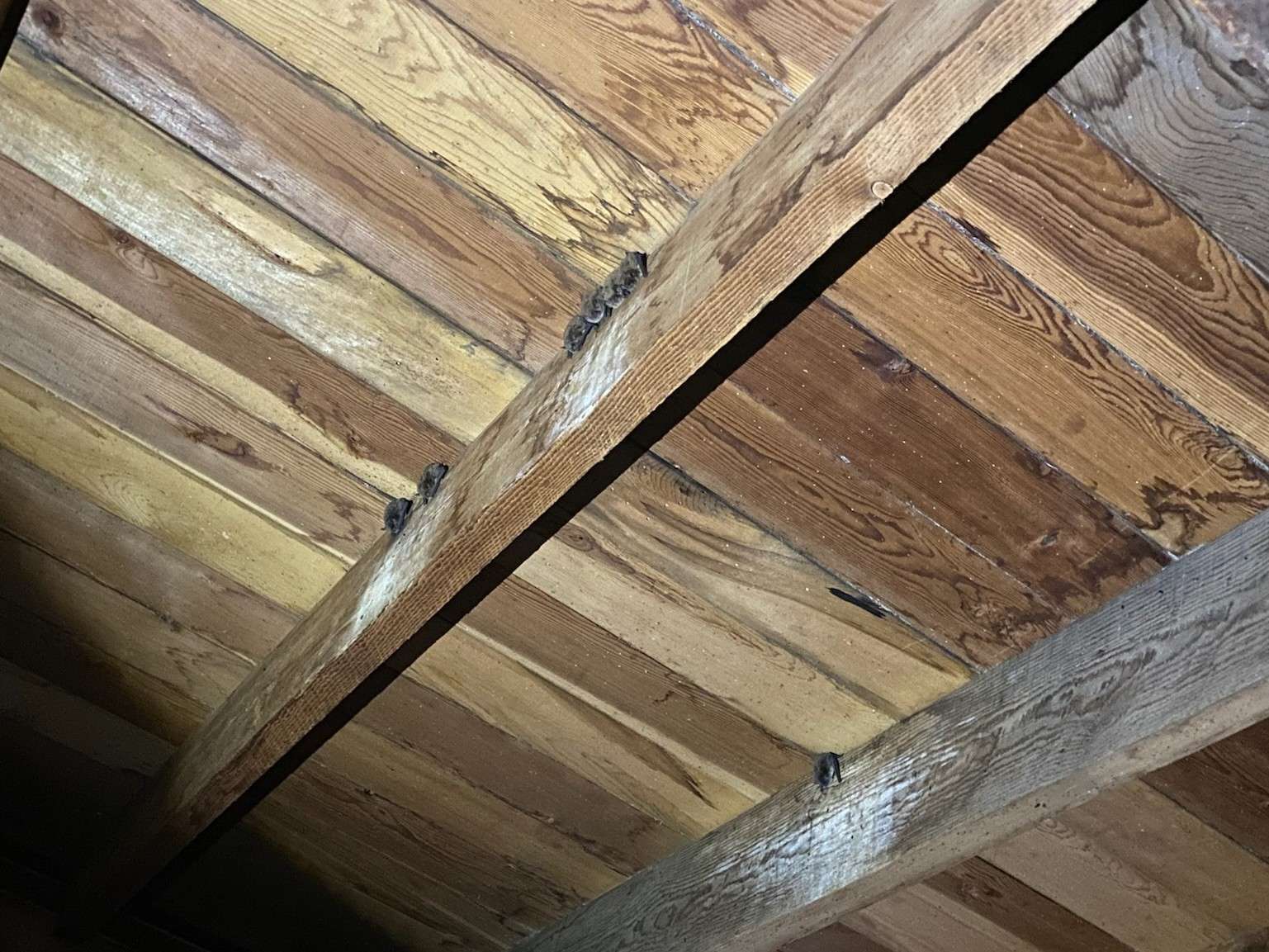
British Columbia is home to 15 bat species that breed within the province. Bats aren’t rodents, they’re more closely related to primates, and every BC species is an insectivore, eating more than half its body weight in insects each night. That makes them quiet allies for agriculture and forestry.
Raise awareness
We share science-based information so people across BC understand and value bats.
Help with bats in buildings
We guide homeowners on living with a colony, humane exclusion, and bat boxes.
Collect data
We gather the monitoring data needed to understand and protect BC’s bats over time.
White-nose syndrome.
White-nose syndrome (WNS), a fungal disease that has devastated bats elsewhere in North America, has been detected in BC. We work with the provincial government and ask for the public’s help to watch for its spread.
Learn what WNS is, where it’s been found, and how to help on our white-nose syndrome page, and please report any dead bats you find between November and May.
Counted by volunteers.
Each summer, volunteers and biologists carry out the BC Annual Bat Count, evening counts at maternity roosts across the province that tell us how colonies are doing.
Anyone can take part. See how on Count bats, or explore all the ways to get involved.
A province-wide network.
The BC Community Bat Program is a not-for-profit network of community bat projects across British Columbia, 18 regional programs, from the Fraser Valley and Metro Vancouver to the Okanagan, Vancouver Island, and the Gulf Islands.
The provincial “Got Bats?” network, in partnership with the Ministry of Environment, works to:
- Increase the number of known bat roosts in buildings and other structures.
- Support landowners to protect roosts or use bat-friendly exclusion methods.
- Promote the Annual Bat Count to monitor bat populations.
- Enhance habitat through bat-box installation and monitoring.
Bats are managed locally, find the Community Bat Program in your region for advice close to home.