
Start here
First, give it a way out.
Stay calm and move slowly. A bat in flight is just looking for an exit, your job is to make one obvious.
It’s common for a bat to end up indoors, usually chasing a moth through a door or window left open after dusk, or, for crevice-roosting bats, while searching for somewhere safe to rest. Most are young-of-the-year or migrating bats, and almost all just need an open path back outside.
- Move pets and children out of the room.
- Close the doors to other rooms so the bat can’t spread through the house.
- Open all doors and screenless windows that lead outside.
- Dim the indoor lights and let the natural light from outside draw the bat out. In the dark, shine a flashlight toward the open exit to guide it.
- Stop, stand back, and watch, note where the bat flies out or lands.
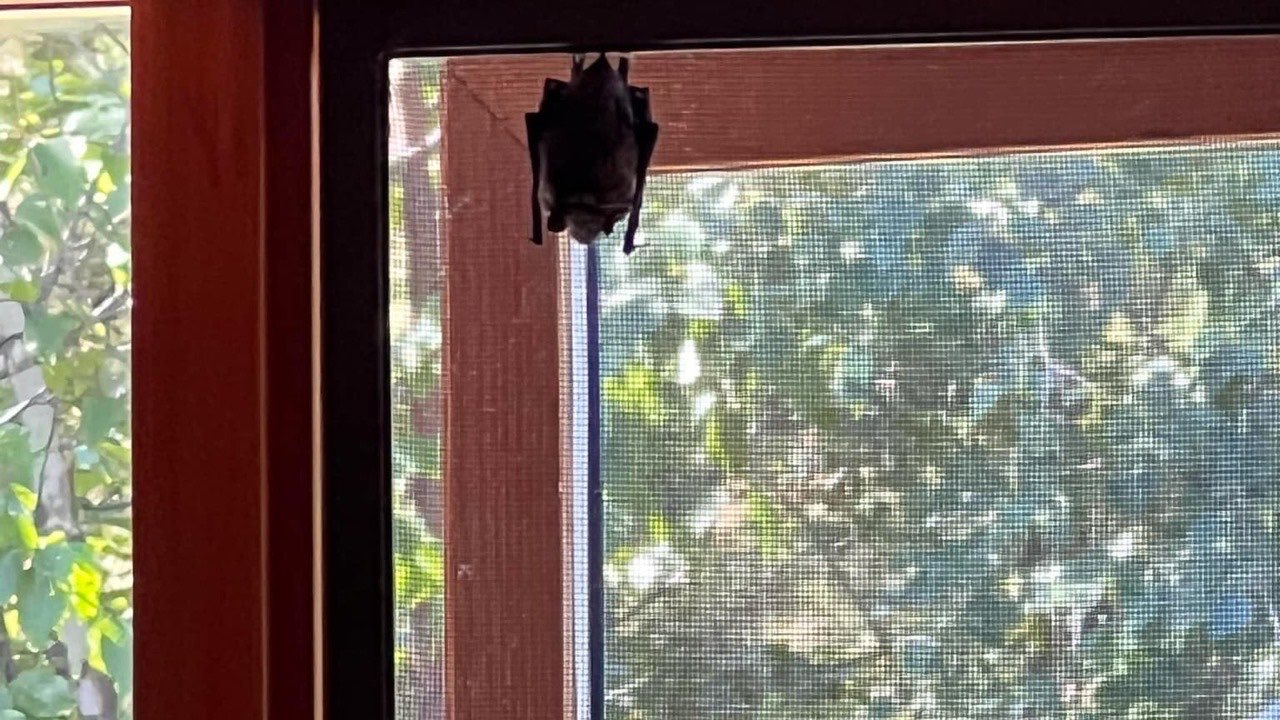
If it lands and won’t leave
The cupping method.
If the bat settles on a wall, curtain, or ceiling instead of flying out, you can move it outside yourself, gently, and with the right gear.
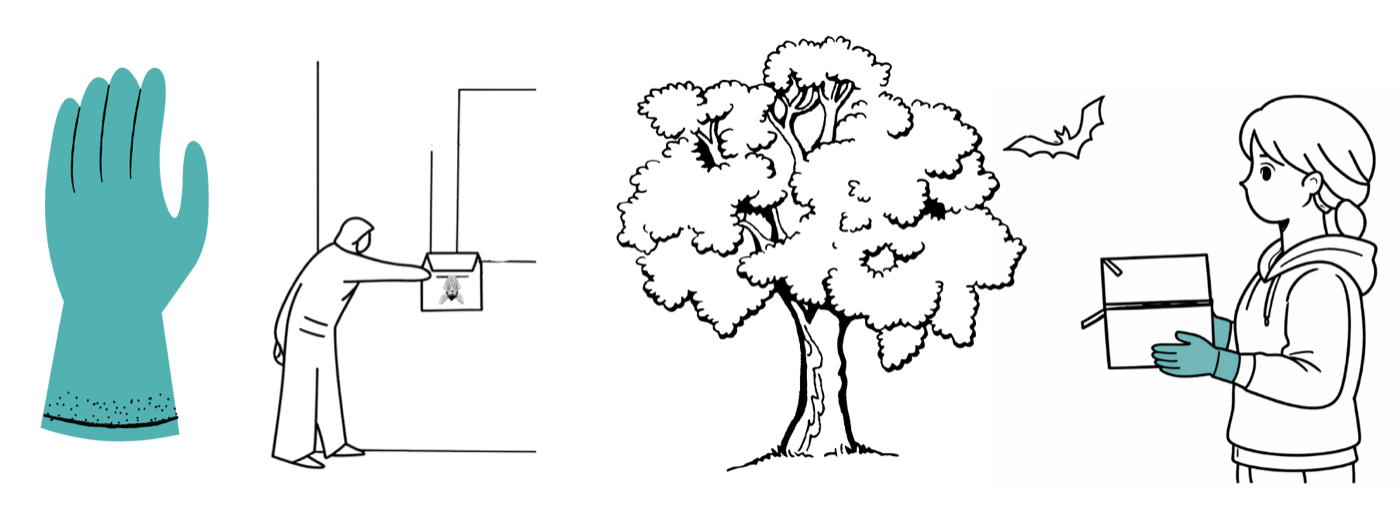
- Put on thick gloves and long sleeves.
- Find a container, a clear plastic tub, box, or clean yogurt container, and a stiff lid such as cardboard or a thin magazine.
- Wait until the bat is completely still.
- Place the container over the bat, then gently slide the lid between the container and the surface. Take care not to catch its wings.
- Carry it outside to a tree or fence, away from pets and children, with afternoon shade if it’s hot. Never set it in shrubs or on the ground.
- Tip the container against the tree at about head height, or onto a ledge roughly 5 feet up. Most bats can’t take off from the ground, they need height to drop into flight.
- Open the container and let the bat crawl out on its own. Never throw it, it may be stressed or injured. It may rest on the bark a while before flying off.