What is white-nose syndrome?
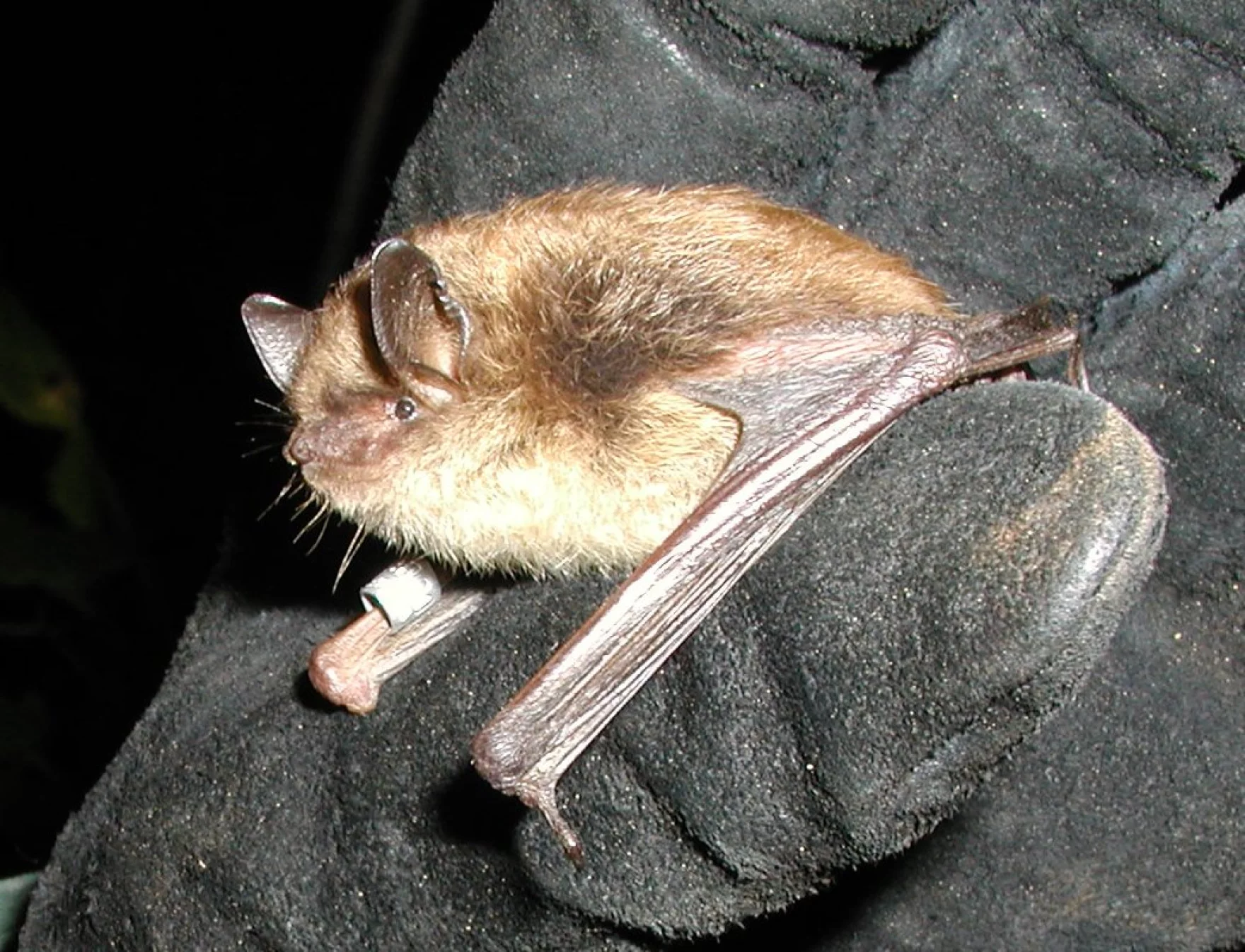
White-nose syndrome (WNS) is a fatal bat disease that is spreading through western North America.
It is caused by a fungus called Pseudogymnoascus destructans (Pd), which causes skin irritation and damage in bats, but it does not affect people. The Pd fungus attacks bats during hibernation and is easily spread through skin-to-skin contact between bats in a cave or mine.
The disease is moving from east to west across North America, and WNS is now in some bats in Alberta and Washington State. Unfortunately, the fungus was detected in guano samples in the Boundary region of BC in 2022 and in Metro Vancouver in 2025. The good news: as of March 2026, no sick bats with WNS have been found in BC, and none of the bat counts at maternity colonies in 2025 indicated a decline.
White-nose syndrome surveillance
The BC Community Bat Program is kindly asking for the public’s help to monitor for the spread of white-nose syndrome into BC. There are three simple ways to help.
How to collect a dead bat
- Put on gloves, never handle a bat with bare hands.
- Gently wrap the bat in a paper towel and place it into a plastic bag.
- Keep it in the freezer, or in a box with ice.
- Add a label with the date, location, and your name.
- Contact us for next steps.
Monitor your roost in spring
Because WNS may cause bats to emerge early from hibernation, watching your roost in spring can help us track the disease’s spread. When bats first return, check your roost every two weeks:
- Look for guano under the roost site, and for bats if you can see inside.
- Listen for squeaks and scratching sounds.
- Report the date you first notice bats at your roost site.
Report any spring mortalities
WNS causes bats to use up valuable fat stores, and even if they survive hibernation they may perish in early spring. Once bats are back at your roost, monitor regularly for dead bats and report any carcasses. Have questions? Your regional coordinator can help.
White-nose syndrome questions.
What is white-nose syndrome?
White-nose syndrome (WNS) is a deadly fungal disease of hibernating bats caused by Pseudogymnoascus destructans. It grows on the muzzle and wings in winter, rousing bats so they burn through their fat reserves and die. It has killed millions of North American bats.
Is white-nose syndrome in British Columbia?
Yes — the fungus was confirmed in BC in 2023. Because our bats hibernate in scattered, hard-to-find sites, monitoring depends heavily on public reports of dead bats and winter bat activity.
Can white-nose syndrome infect people or pets?
No. WNS affects only bats and is not known to harm people, pets, or other animals. However, people can accidentally carry fungal spores on gear and clothing, so decontamination between sites matters.
How can I help stop white-nose syndrome?
Report dead bats or any winter bat activity to the BC Community Bat Program, decontaminate gear between caves and roosts, and never disturb hibernating bats. Supporting healthy summer colonies also helps by boosting pup numbers.