
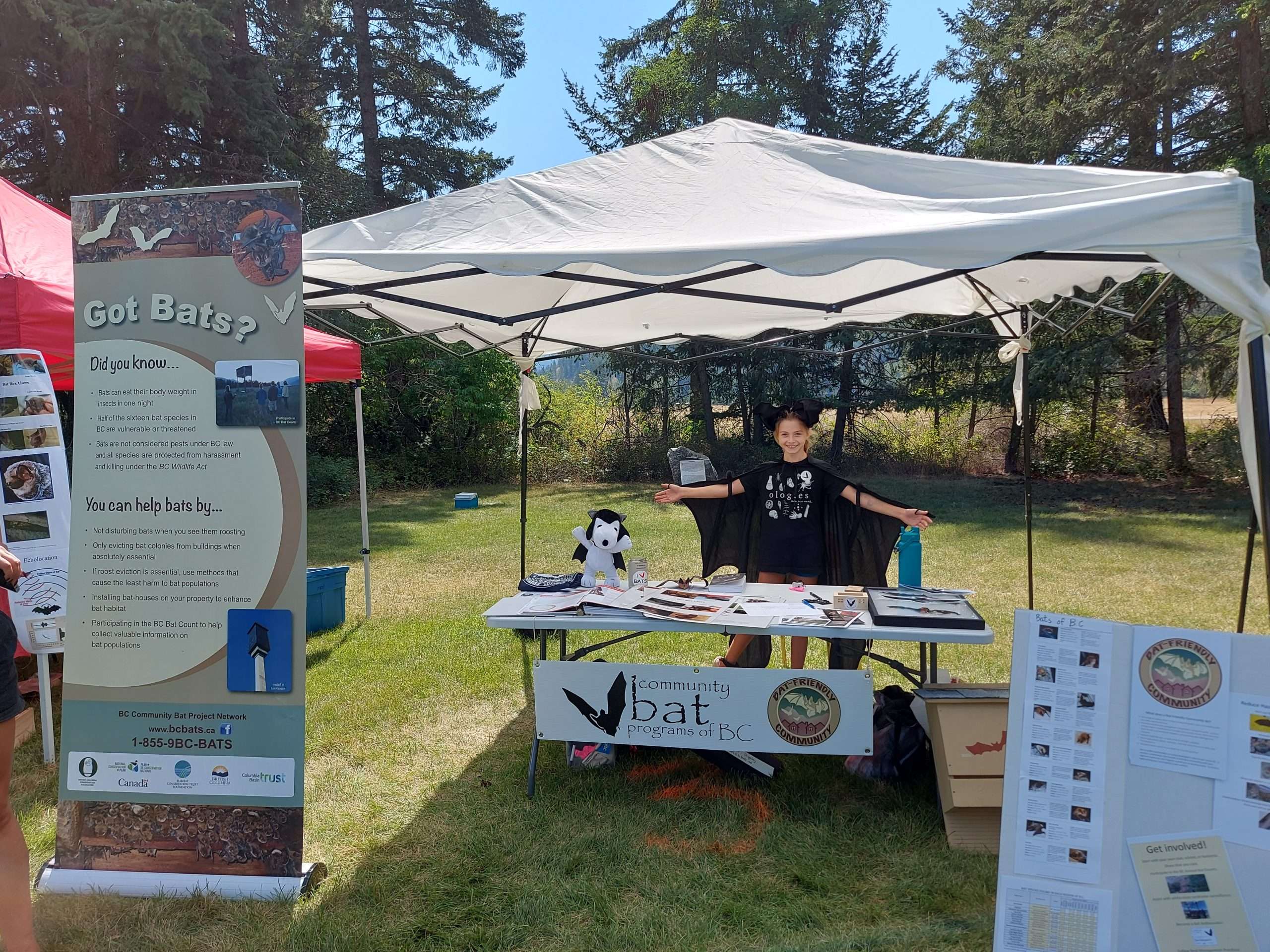
Halloween images of spooky bats and blood-sucking vampires are popular. However, they have also created fear and misconceptions about these important animals. International Bat Week is from October 24 – 31st, and it’s a great time to bust some myths. The BC Community Bat Programs are encouraging everyone to learn a fact or two about the 15 species of bats that live in British Columbia.
The bats in BC are major predators of insects, devouring many insects that are considered pests to our forestry and agricultural industries. This makes them an important part of our economy as they provide millions of dollars worth in natural pest control.
“Host a Bat Week Party or other special event to get others excited about bats,” says Paula Rodriguez de la Vega, BC Community Bat Programs coordinator. “You can feature bat-themed games or trivia, a costume contest, and foods and drinks in the shape of moths, mosquitos, or other insects as this is what our bats eat here – anything to highlight our amazing bats!” Find more ideas at /get-involved/bat-week/ or www.batweek.org.
Contact your local nature centre, museum, or public park offices to see if they are offering any bat talks. Take your kids or grandkids to your local library and sign out bat books.
“Most bats in BC only have one pup per female in the summer and they face many threats to survive,” says Rodriguez de la Vega. White-nose Syndrome is a disease that has killed millions of bats in eastern North America. It is caused by a fungus that attacks them in winter when they are hibernating. It does not affect people or other animals.
“People can help us monitor bat populations by keeping an eye out for winter bat activity or dead bats. If you find one, report it,” says Rodriguez de la Vega who also cautions to never touch a bat with bare hands or allow your pets to contact it. The BC Community Bat Programs are working with BC government biologists to collect and test dead bats in order to detect White-nose Syndrome. It has not been found in BC yet, but it is in Alberta and just south of BC, in the Seattle area. Please report dead bats online at www.bcbats.ca, call 1-855-922-2287, or email bcbats@gmail.com.
Bat Week also marks the time of year when bats disappear from our neighbourhoods, until the return of warmer weather in spring. As insect-eaters, our BC bats must leave their summer roost sites and migrate or hibernate to survive the winter. This absence means that this is the time of year to do home renovations that you have delayed due to bat presence. You can clean out and repair a bat box, or do bat-friendly exclusion work, without disturbing or injuring bats.
The BC Community Bat Programs provide information and promote stewardship and citizen science in partnership with the BC Ministry of Environment, and are funded by the Habitat Conservation Trust Foundation, Forest Enhancement Society of BC, Habitat Stewardship Program, and many regional partners.