
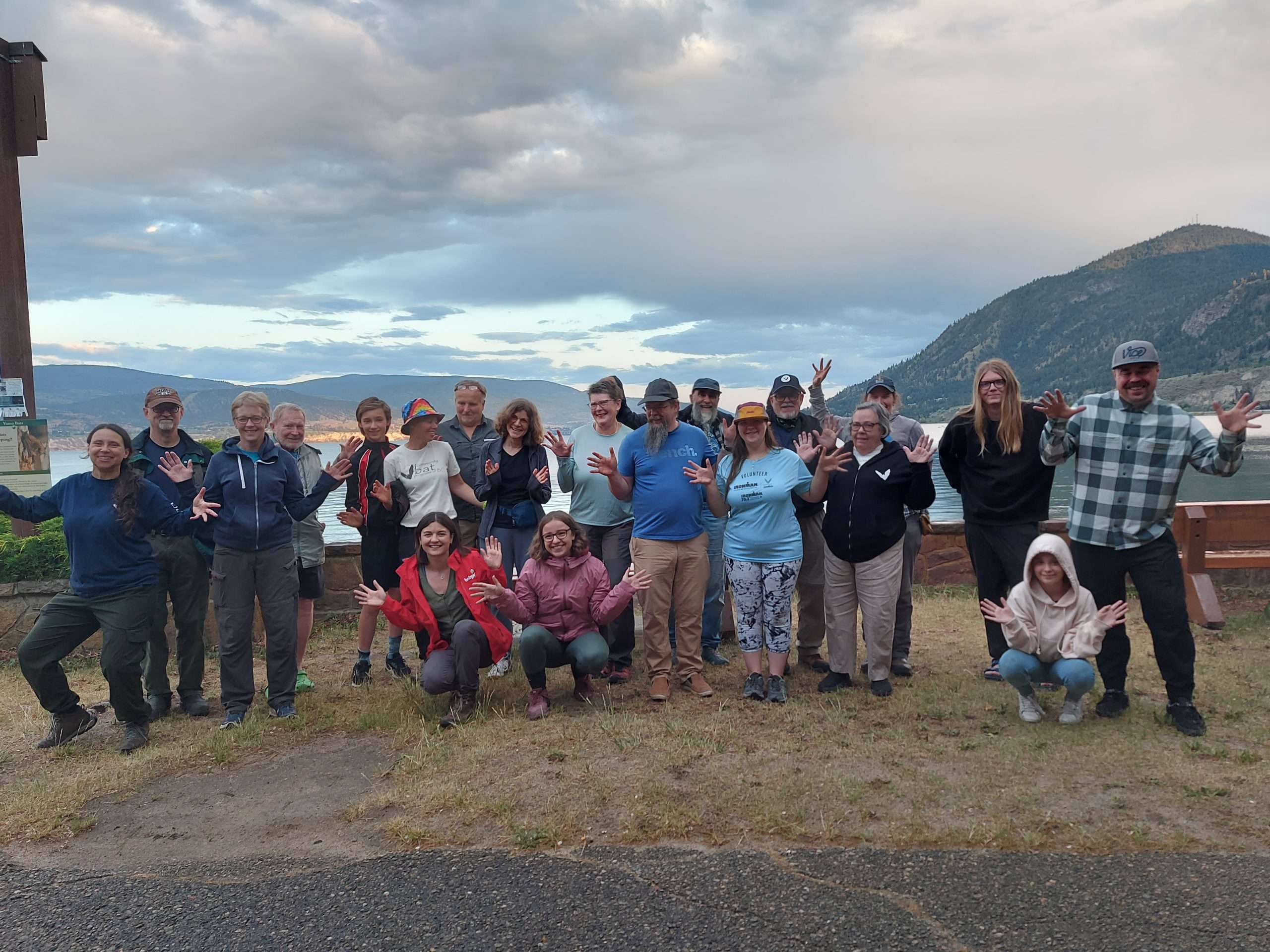
The BC Community Bat Program is encouraging residents to celebrate Bat Week 2025, an international celebration of bats and their importance to ecosystems and communities. Bat Week runs from October 24 to 31, 2025. Residents can learn more about bats by visiting a local library, natural history museum, or www.bcbats.ca to download Bat Week activities. Teachers can also plan activities for students from the BC Bat Edukit Activity Guide. And sign out the Bat Edukit from our participating partners.
**“**Bats are remarkable creatures that play a vital role in maintaining the health of our natural world and economy,” says Paula Rodriguez de la Vega, BC Community Bat Program Provincial Coordinator.
In British Columbia, there are at least 15 species of bats. “Bats contribute to natural pest control by consuming mosquitoes, as well as pests of agriculture and forestry,” says de la Vega. “Bats also cycle nutrients between aquatic environments where they eat and upland environments where they sleep and poop.”
“Culturally, bats are also significant. Where would we be without characters like Batman, Dracula, and the Count from Sesame Street?” says de la Vega.
Despite their importance, bats face serious threats that they are ill-prepared to withstand due to their low reproductive rates. “Most BC species give birth to only one pup per year,” says de la Vega.
At this time of year, bats are fattening up for their winter hibernation, devouring many insects every night. “As they migrate to their winter habitat, they may roost above your doorway or in unusual open areas. Please allow the bat to stay; it will leave on its own in a few days” says de la Vega.
A major threat to bats is White-nose Syndrome, a deadly fungal disease expected to spread to BC, and is currently killing bats in Alberta and Washington. “We are monitoring for it in BC by asking the public to report dead bats or winter bat activity,” says de la Vega. Please report to www.bcbats.ca, call 1-855-922-2287, or email bcbats@gmail.com.
There are lots of things BC residents can do to help bats. Learning to coexist safely with bats is top of the list or follow proper guidelines to exclude bats from buildings. “Remember to never touch a bat. Rabies is extremely rare and preventable if you don’t come into contact with bats,” says de la Vega. Less than 1% of bats carry rabies and it is only transferred by a bite or scratch. Less than 30 people have died in the last 100 years from rabies in Canada.
“Together, we can help protect these fascinating creatures and the ecosystems they support,” says de la Vega. BC Community Bat Program is made possible thanks to funding from the Habitat Conservation Trust Foundation, BC Conservation Foundation, the BC government, and Environment & Climate Change Canada. In addition, we are grateful for the support of many regional partners and volunteers. We couldn’t do all that we do without you! Photo: Celebrate Bat Week. Learn about the 15 species of bats that live in BC by visiting /bat-basics/bat-species-in-bc/, going to the library, hosting a bat party, becoming a Bat Ambassador, or visiting an educational display or talk in your area.